Arnold Böcklin’s Isle of the Dead, 1880–1886
Arnold Böcklin painted Isle of the Dead five times between 1880 and 1886. This essay follows the commission of 1880 that gave the boat its coffin and figure in white, the Berlin version of 1883 that spread through prints and photographs, and the symphonic poems of Rachmaninoff and Reger.
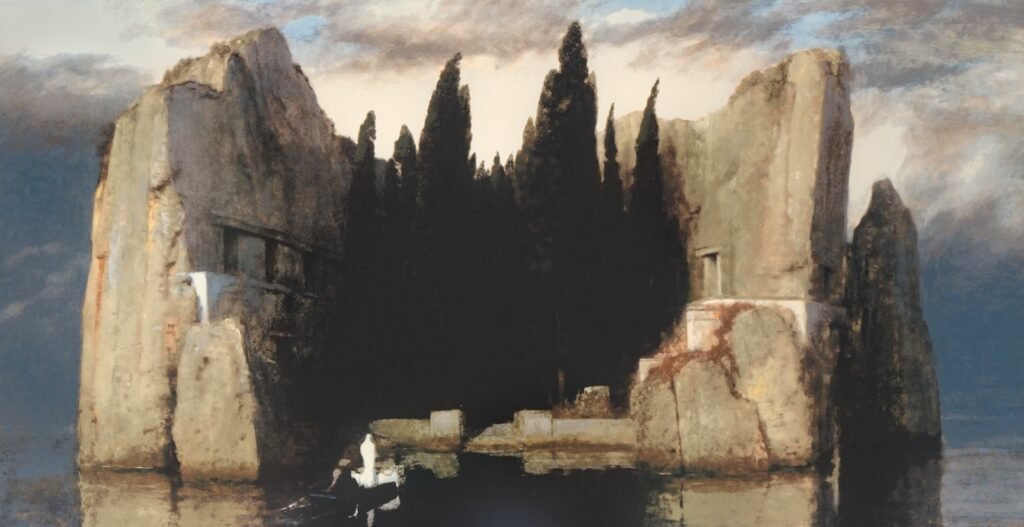
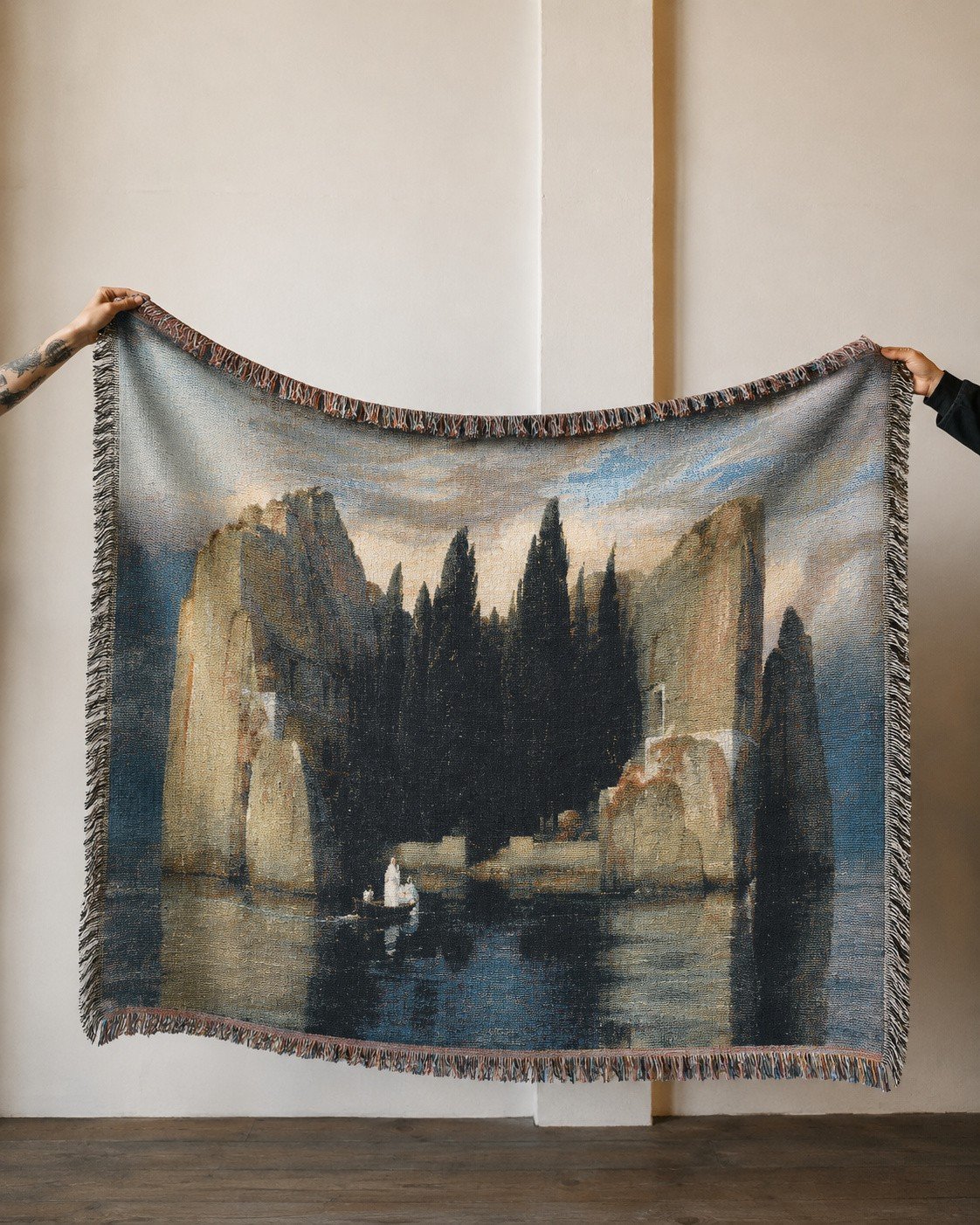
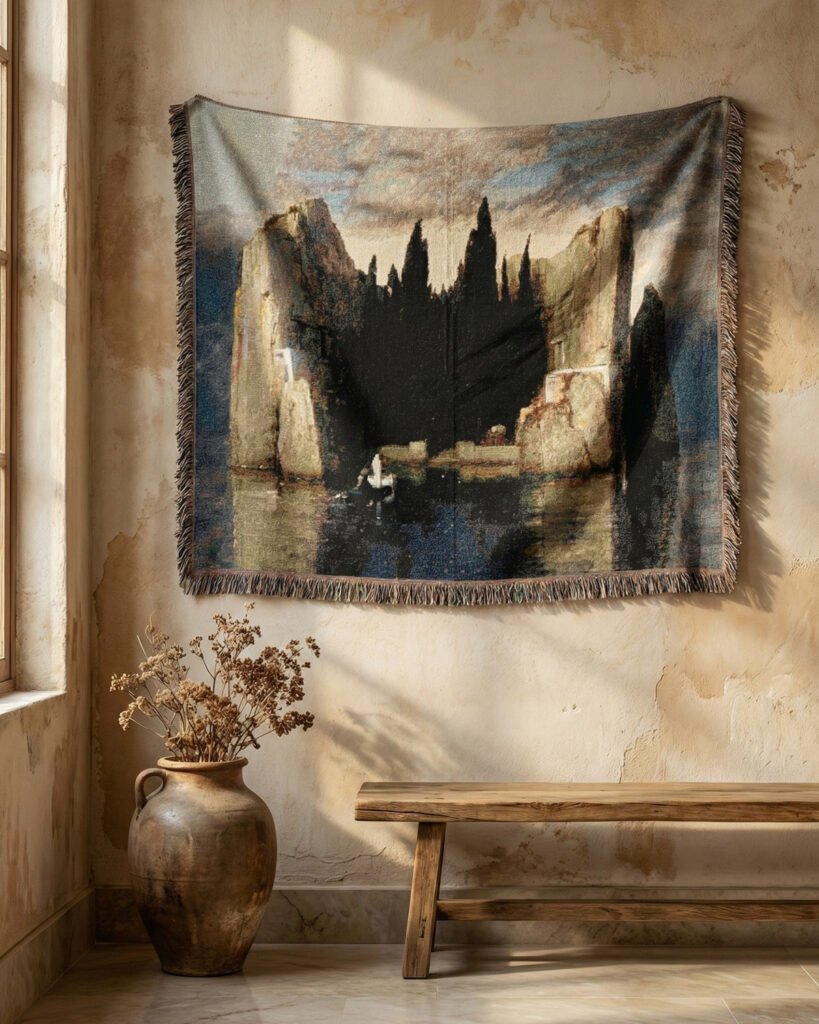
Arnold Böcklin’s Isle of the Dead (Die Toteninsel) shows a rocky island rising from still, dark water. Pale cliffs with doorways cut into the stone enclose a stand of cypresses so dense that the trees read as a single dark mass. In the foreground an oarsman steers a small boat toward the island, and in the boat a figure wrapped in white stands upright behind a coffin draped in cloth. The version of 1883 in the Alte Nationalgalerie, Berlin, painted in oil on wood, is the best known of the five that Böcklin made of the subject. Beside the architecture of rock and trees the boat is easily overlooked, but what it carries has its own documented history. The coffin and the shrouded figure were added in 1880, when Böcklin painted an earlier version for a patron who asked for them.
The commission of 1880
The Swiss painter Arnold Böcklin was born in Basel in 1827 and died in Italy in 1901. In the spring of 1880 he was working in a studio in Florence, where Marie Berna, a young widow, came to visit him. There she saw an unfinished painting of a rocky island and asked Böcklin for “a picture to dream by,” a request that the Alte Nationalgalerie records in German as ein Bild zum Träumen.
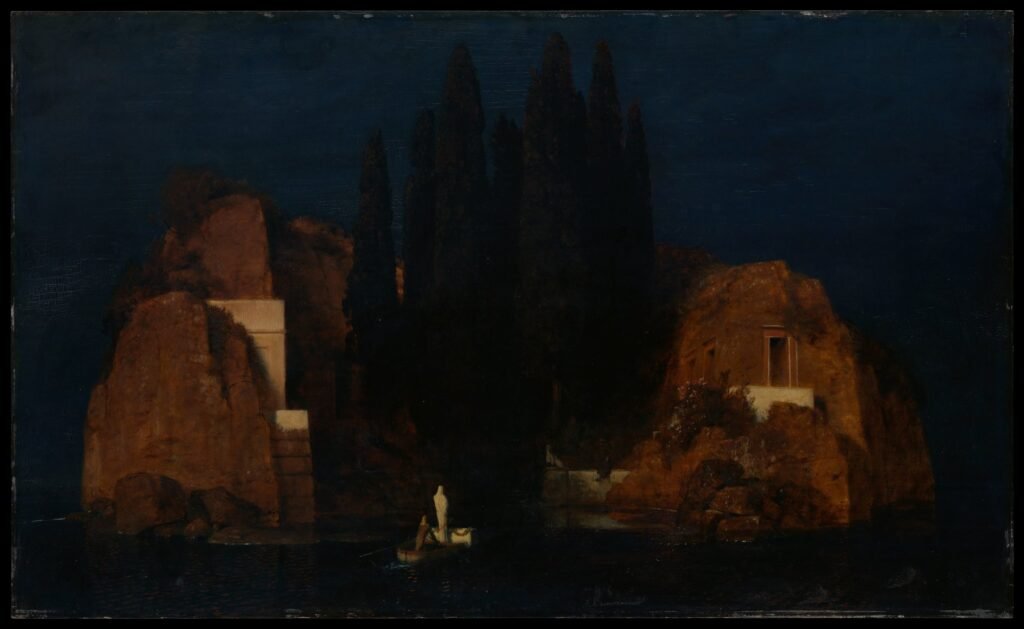
Böcklin painted a version for her as a memorial to her late husband. According to The Metropolitan Museum of Art in New York, which now owns this painting of 1880, he added two elements to the rowboat at her request: a draped coffin and a figure shrouded in white. Like the later Berlin version, the New York picture is painted in oil on wood. The addition is modest in scale, but its origin suggests that the motif which gives the island its human focus, a shrouded figure standing behind a coffin as the boat approaches, entered the composition in response to a private loss and was not part of the painter’s first design. The motif remains in the version of 1883, and in that form the picture later became widely known.
Five versions, 1880–1886
The painting for Marie Berna was one of a series. Between 1880 and 1886 Böcklin painted the island five times, and each version differs slightly from the others. Four of them survive: the first version of 1880, in the Kunstmuseum Basel; the version painted for Marie Berna in the same year, now in The Metropolitan Museum of Art, New York; the third version, of 1883, in the Alte Nationalgalerie, Berlin; and the fifth, of 1886, in the Museum der bildenden Künste, Leipzig. The fourth version, painted in 1884, was destroyed during the Second World War and is known today from a black-and-white photograph.
The Berlin version and its reproduction
The version now in Berlin was not painted for a widow. It was commissioned in 1883 by the art dealer Fritz Gurlitt, whom the museum describes as a shrewd businessman, and it was Gurlitt who asked the artist Max Klinger to make an etching after the painting. Klinger’s etching and aquatint is dated 1890 and printed in black ink, with an image measuring 41.8 by 69.4 centimeters. According to the Alte Nationalgalerie, the 1883 version spread in countless prints and photographs and established the painting’s fame in the late nineteenth century.
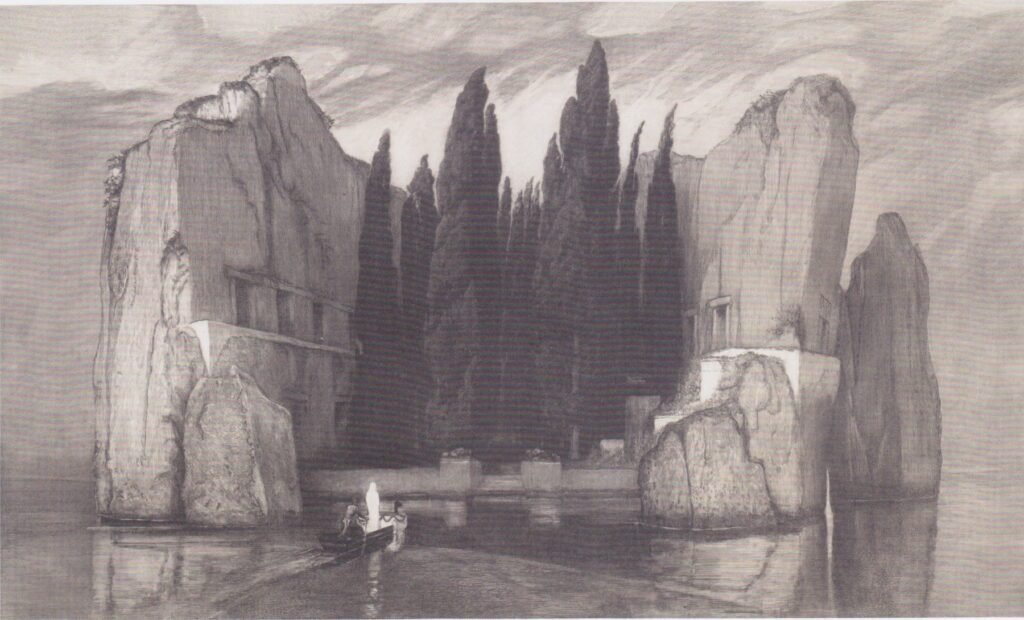
The museum’s own description of the painting dwells on its atmosphere. It calls the place eerie and observes that the steps lead the eye inward, although the gaze never reaches the dark interior; the still water and the boat, with the white-wrapped figure behind the coffin, add a melancholy note. The composition fits this reading. The boat sets a direction across the water toward the low wall and the steps of the landing, and from there the eye is drawn up into the gap between the cypresses, where the light gives out. The sequence starts from the figure in white, the motif Marie Berna first asked for in 1880.
The reach of these reproductions was considerable. It has been claimed that between 1885 and 1900 “no good bourgeois home” was without a reproduction of this or another painting by Böcklin. Sigmund Freud kept a reproduction in his office, and Vladimir Lenin hung one above his bed. For many of its admirers, then, Isle of the Dead was known as a picture on the wall of a home or an office rather than as an oil painting in a gallery, and in Klinger’s etching it circulated in black and white.
Rachmaninoff and Reger
The composer Sergei Rachmaninoff first knew the picture through a black-and-white reproduction. In an interview published in The Musical Observer in May 1927, he recalled its effect: “The massive architecture and mystic message of the painting made a marked impression on me.” In 1909 he made it the subject of a symphonic poem, Isle of the Dead, Op. 29, and that spring he conducted the first performance himself in Moscow.
The music moves in 5/8 time, an uneven meter often heard as the pull of oars, and it quotes the Dies irae, the medieval chant from the Requiem Mass, the Latin Mass for the dead. The work lasts about twenty minutes and draws out over time the crossing that the painting fixes at a single moment. At the very end the rowing rhythm returns, gentler than before.
Rachmaninoff saw the painting in color only later, and by his own account its coloring did not move him much. The black-and-white reproduction through which he had first known the picture appears to have remained his point of reference. In the same interview he said:
If I had seen the original first, I might not have composed my Island of the Dead. I like the picture best in black and white.
Sergei Rachmaninoff, interviewed by Basanta Koomar Roy, The Musical Observer, May 1927
Rachmaninoff was not the only composer to take up the subject. In 1913 Max Reger made Die Toteninsel the third of his Four Tone Poems after Arnold Böcklin, Op. 128. He conducted the first performance himself, in Essen, in October of that year, four years after Rachmaninoff had introduced his own work in Moscow.
Later reception
Through reproduction and through music, the picture reached an audience far wider than the owners of the paintings themselves. The four surviving versions are now divided among museums in Basel, New York, Berlin and Leipzig. The Alte Nationalgalerie plans to bring them together in its exhibition Böcklin. Jenseits des Mythos (Böcklin. Beyond the Myth), from 19 March to 1 August 2027, which the museum describes as the first, and probably the only, reunion of all four. Among them will be the painting made for Marie Berna in 1880, with the coffin and the figure in white that were added at her request.
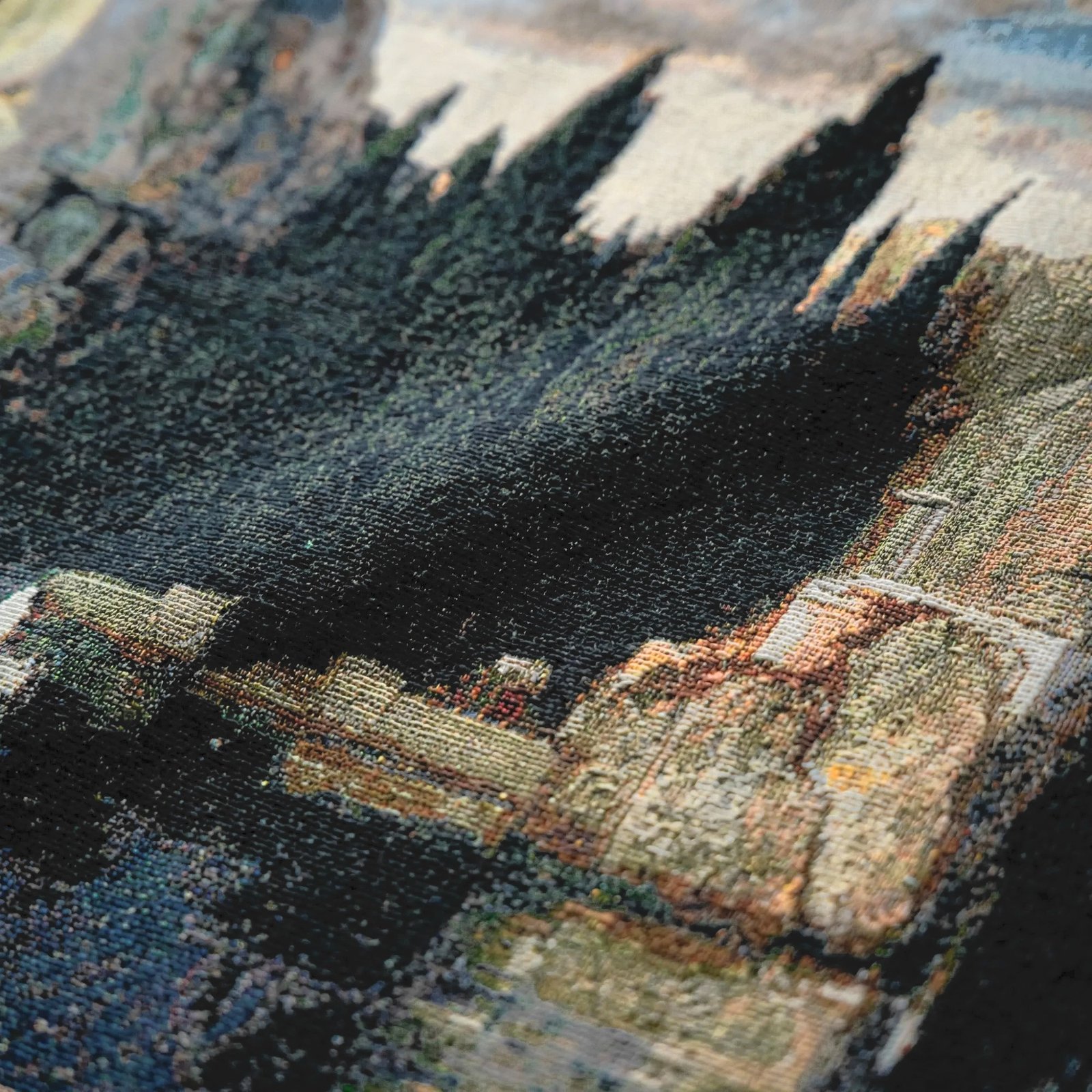
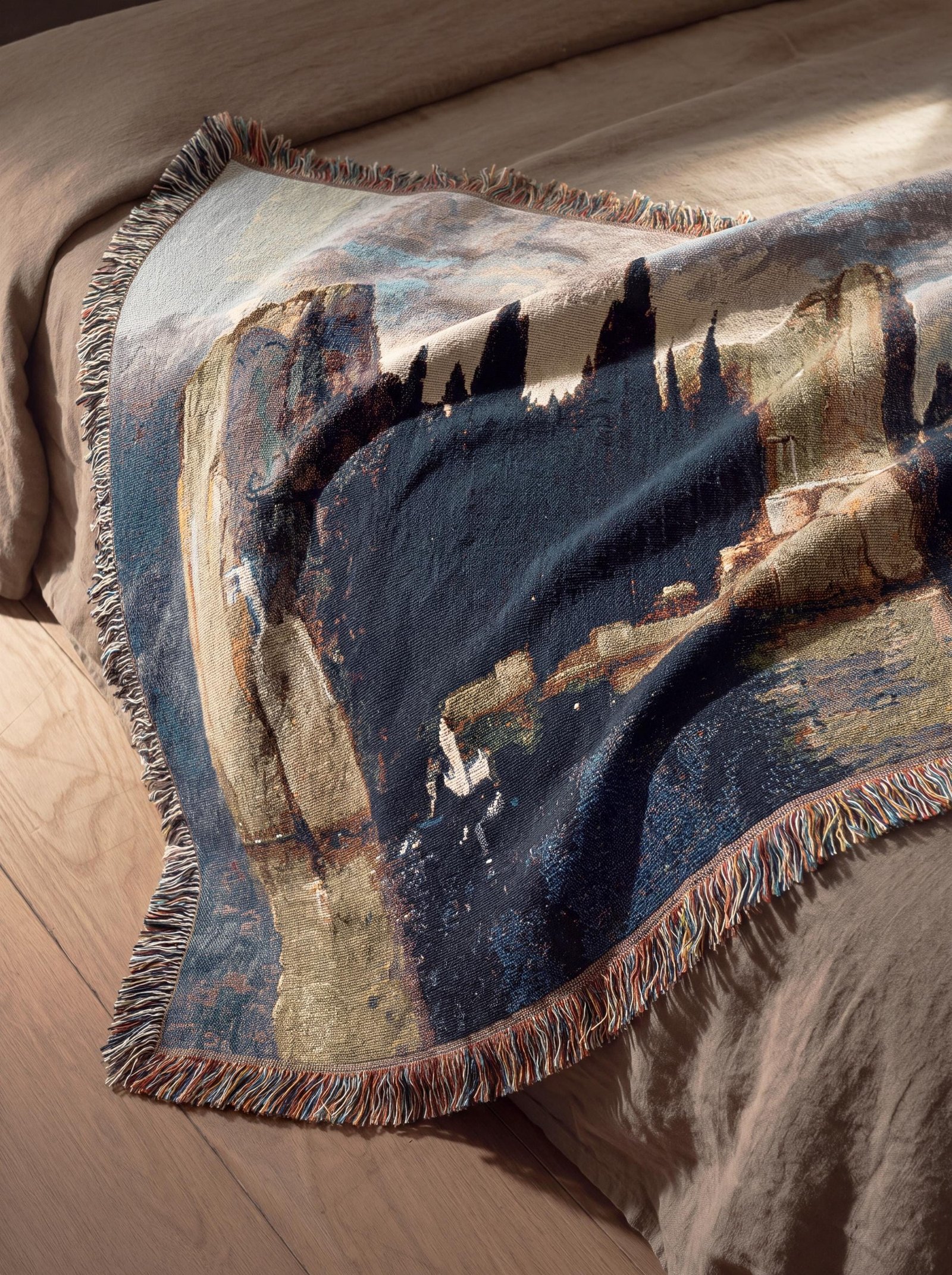
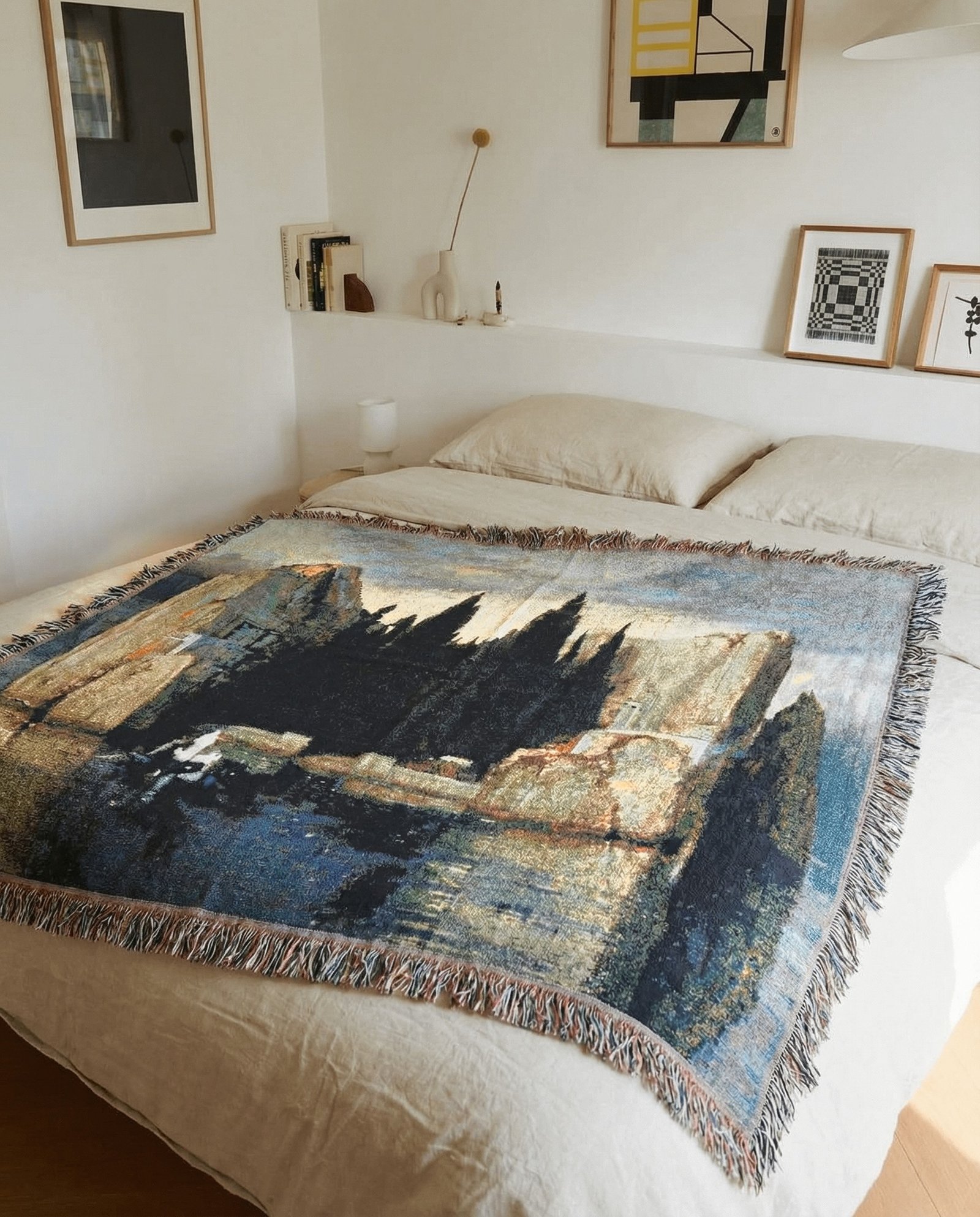
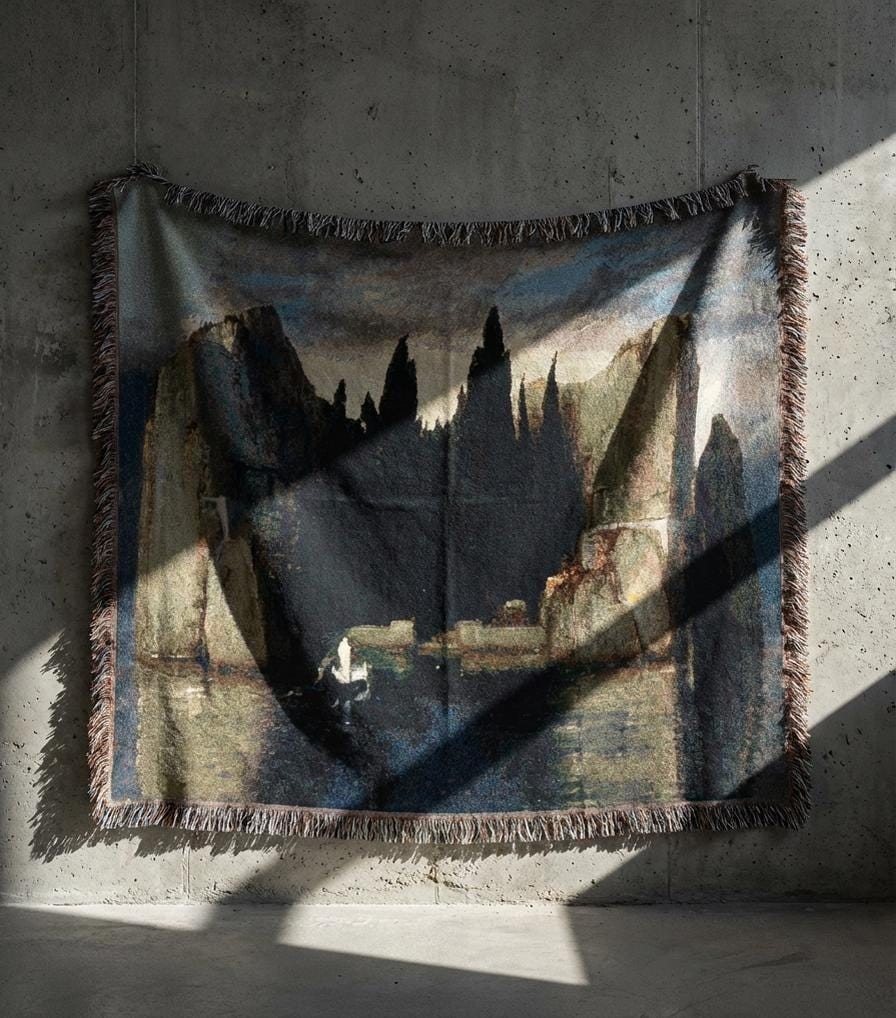
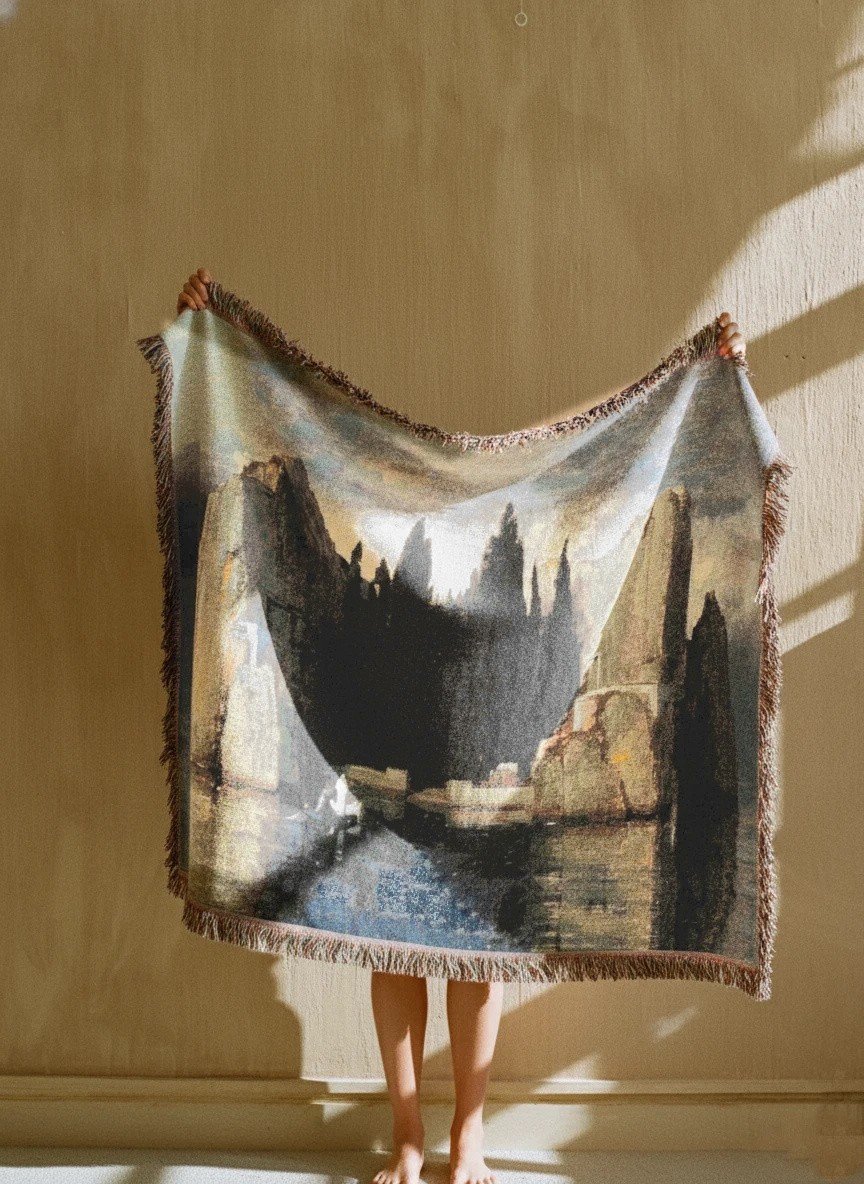
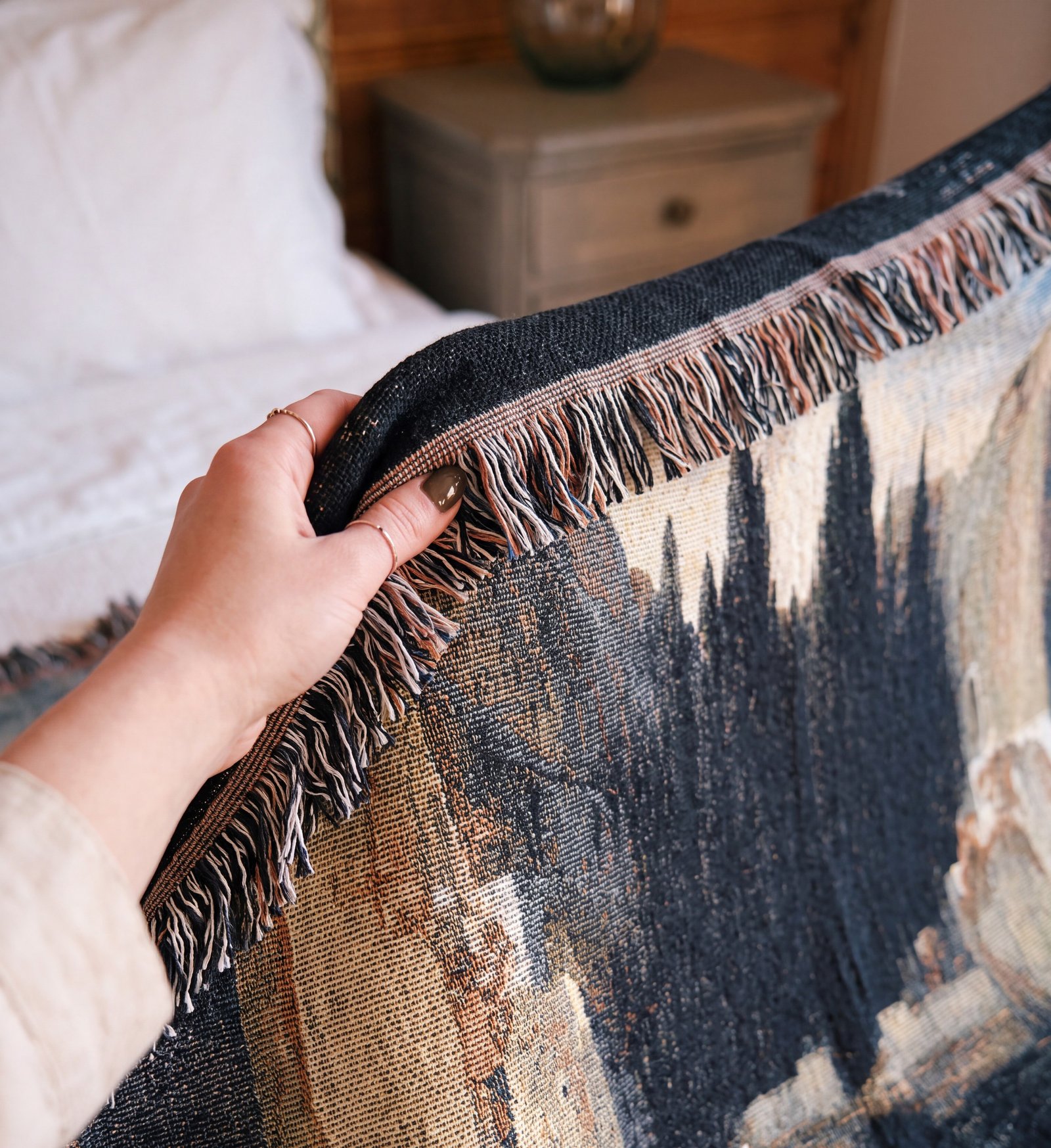
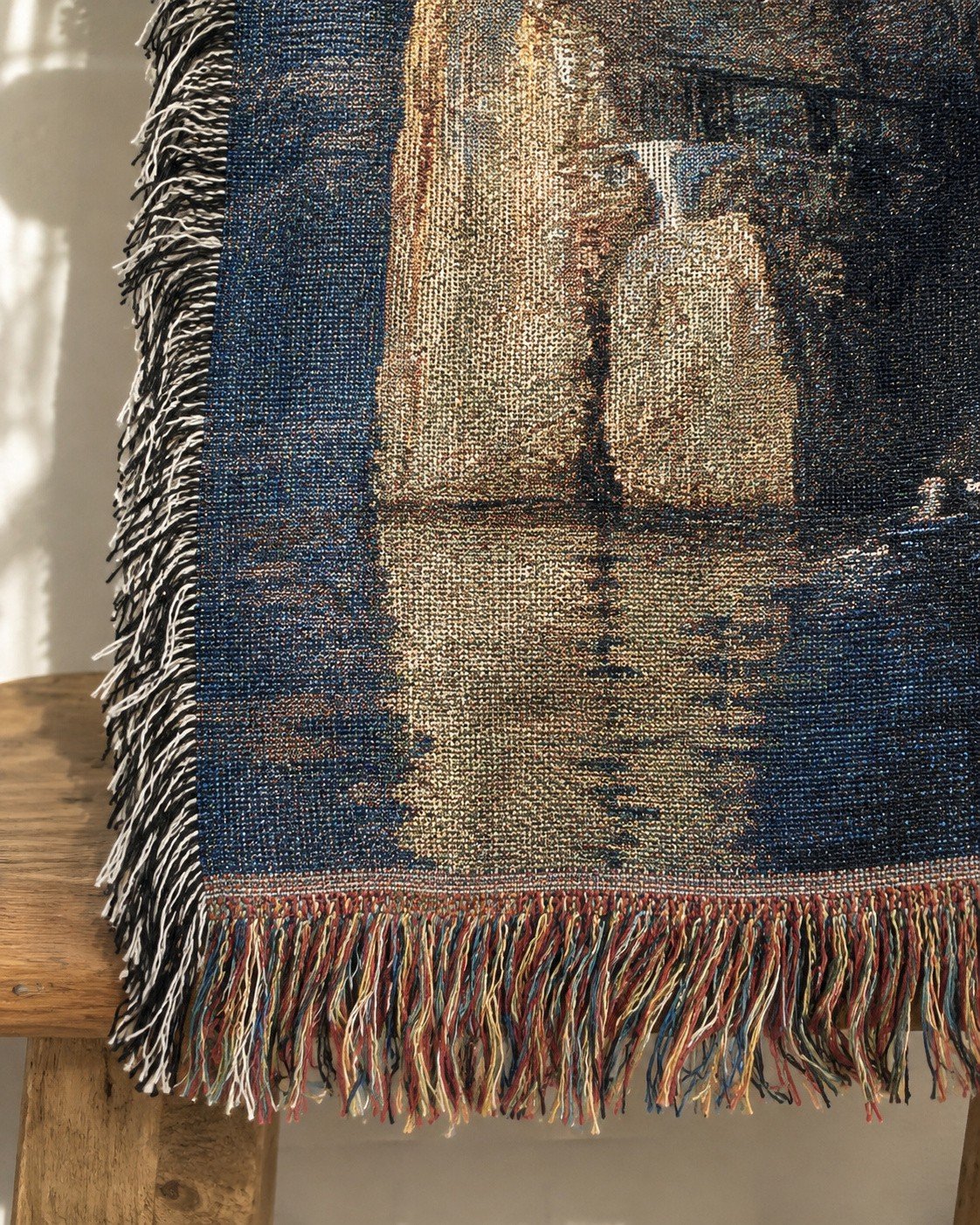
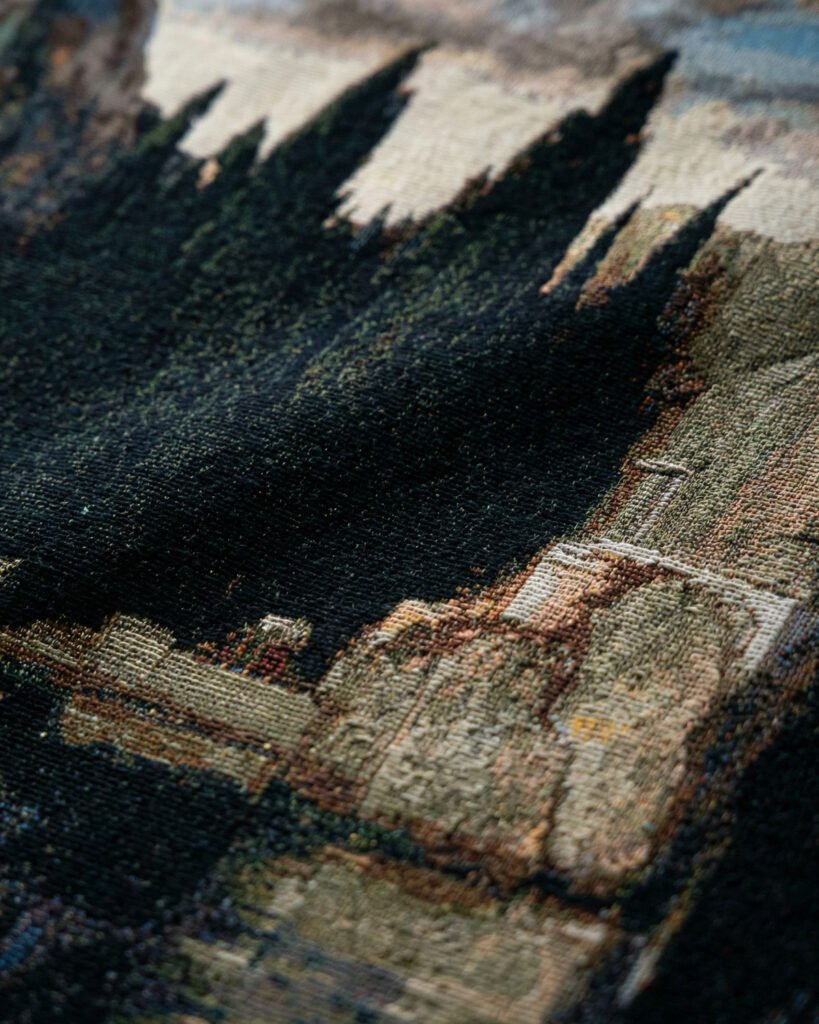
N° 006 Isle of the Dead, after the 1883 version, is in The Noha Studio collection as a woven cotton piece.
Sources
- Staatliche Museen zu Berlin, Alte Nationalgalerie. Arnold Böcklin, Die Toteninsel, 1883, NG 2/80. Object record (German). smb.museum-digital.de/object/144457
- Alte Nationalgalerie, Staatliche Museen zu Berlin. The Isle of the Dead. Museum text on Google Arts & Culture. artsandculture.google.com
- The Metropolitan Museum of Art. Arnold Böcklin, Island of the Dead, 1880, 26.90. Collection record and artist data. metmuseum.org/art/collection/search/435683
- Staatliche Museen zu Berlin. Press release, 11 August 2026: Böcklin. Jenseits des Mythos brings together all four surviving versions of the Toteninsel in 2027 (German). smb.museum
- visitBerlin. Böcklin. Jenseits des Mythos, exhibition page (German). visitberlin.de
- Wikimedia Commons. Black-and-white photograph of the lost fourth version, 1884. commons.wikimedia.org
- Art Institute of Chicago. Max Klinger after Arnold Böcklin, The Isle of the Dead, 1890, etching and aquatint, 2000.111. artic.edu/artworks/153968
- German History in Documents and Images (German Historical Institute, Washington DC). “Arnold Böcklin, Island of the Dead (1883).” germanhistorydocs.org
- German History in Documents and Images (German Historical Institute, Washington DC). “Arnold Böcklin, The Isle of the Dead (1883).” germanhistorydocs.org
- Basanta Koomar Roy, “Rachmaninov Is Reminiscent,” interview with Sergei Rachmaninoff, The Musical Observer, May 1927. Transcription: stephenhicks.org
- John Henken, program note for Rachmaninoff, Isle of the Dead, Hollywood Bowl / Los Angeles Philharmonic. hollywoodbowl.com
- Malte Krasting, programme note for Rachmaninoff, Isle of the Dead, Op. 29, Berliner Philharmoniker. berliner-philharmoniker.de
- IMSLP. Max Reger, 4 Tone Poems after Arnold Böcklin, Op. 128 (1913). imslp.org
- Painting photograph: Jean-Pierre Dalbéra, “A. Böcklin (Alte Nationalgalerie, Berlin),” Wikimedia Commons, CC BY 2.0. commons.wikimedia.org