Gustave Doré: Wood Engravings for the Bible and Dante
Gustave Doré drew his illustrations to the Bible and to Dante directly on blocks of wood, which engravers then cut. This essay follows how the plates were made and reprinted, and looks at two of them, The Vision of the Valley of Dry Bones and Paradiso, Canto XXXI.
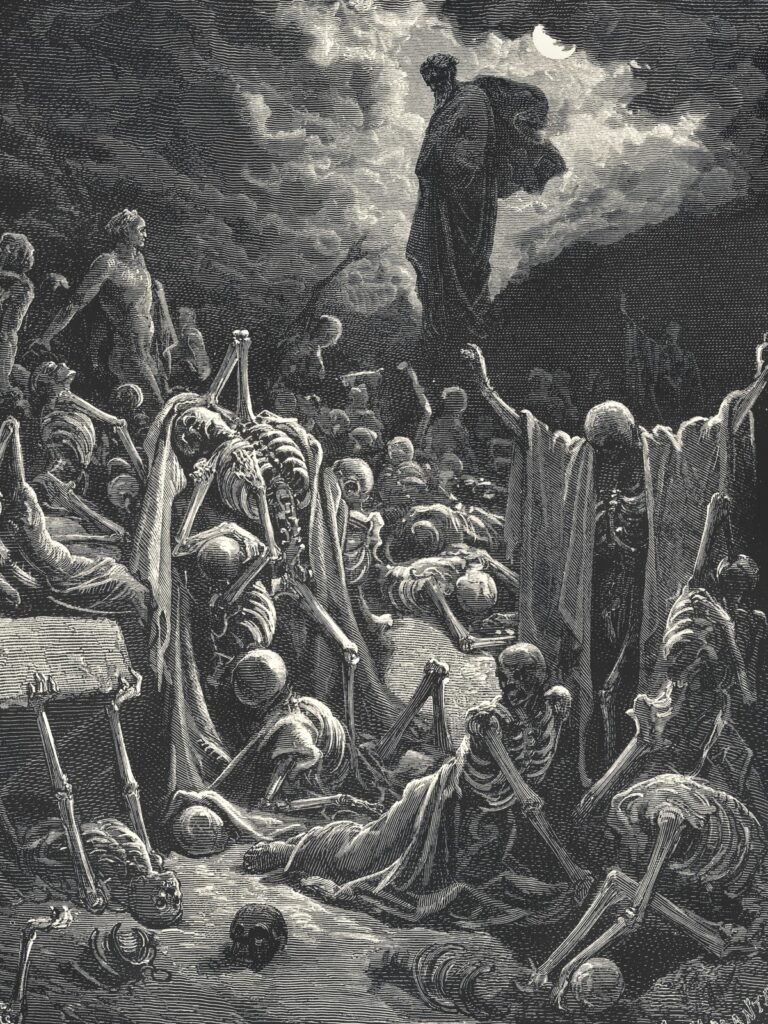
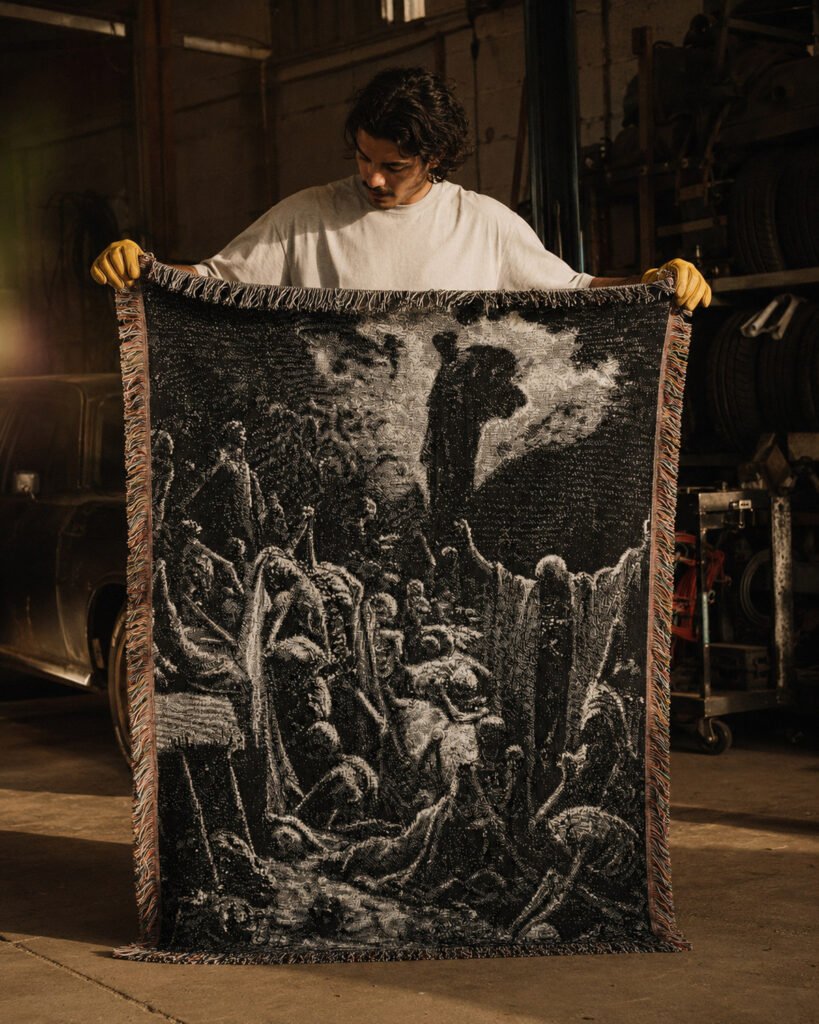
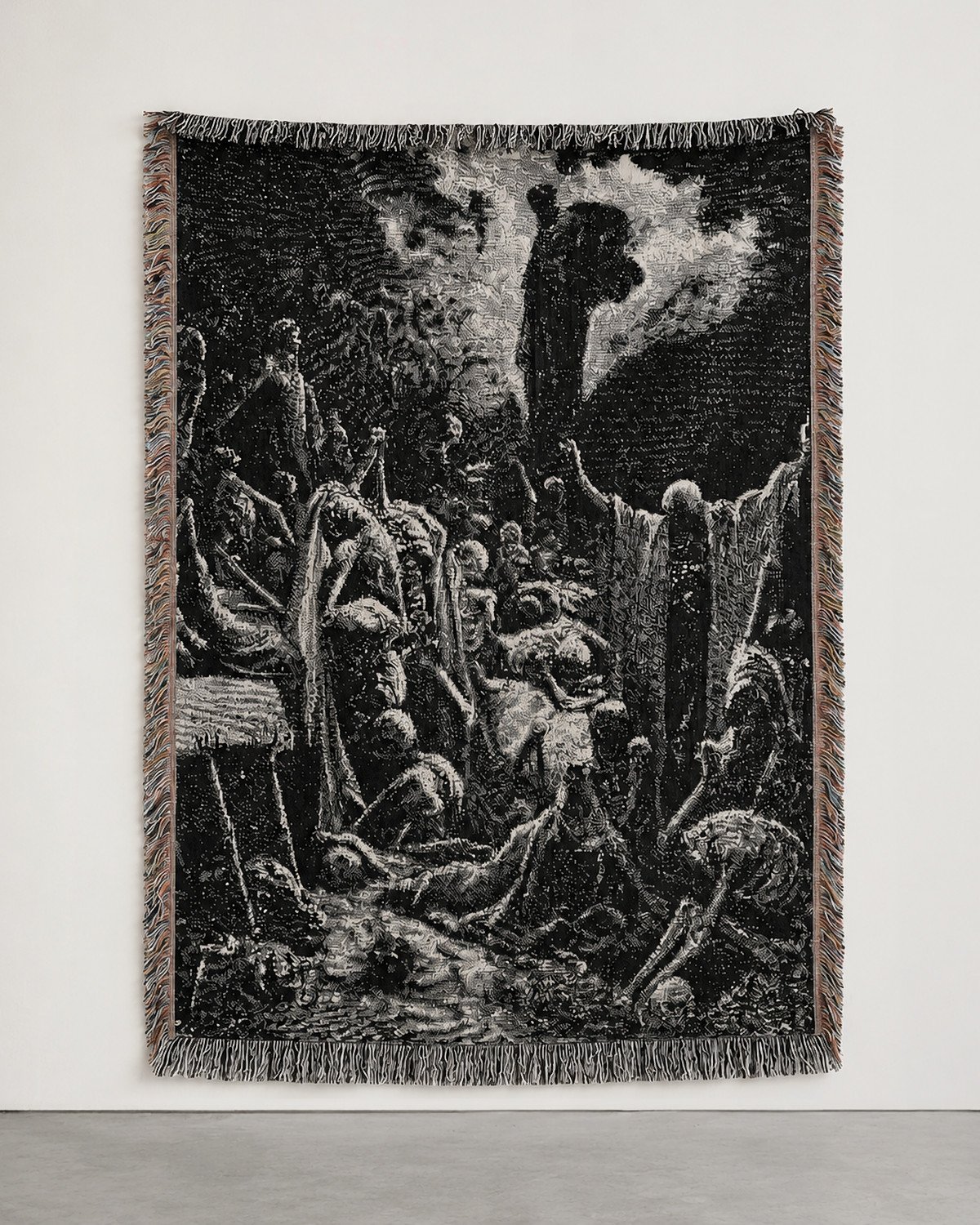
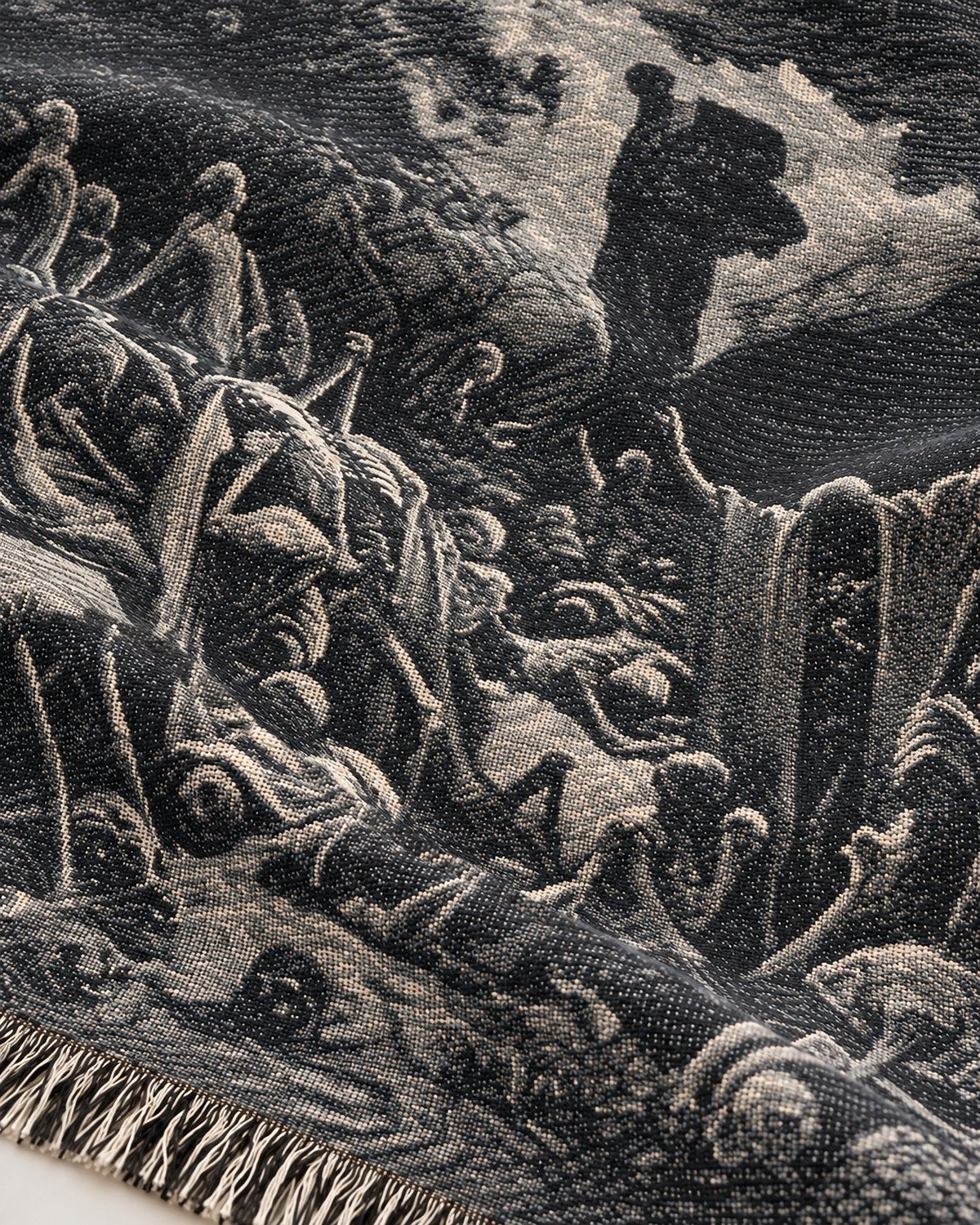
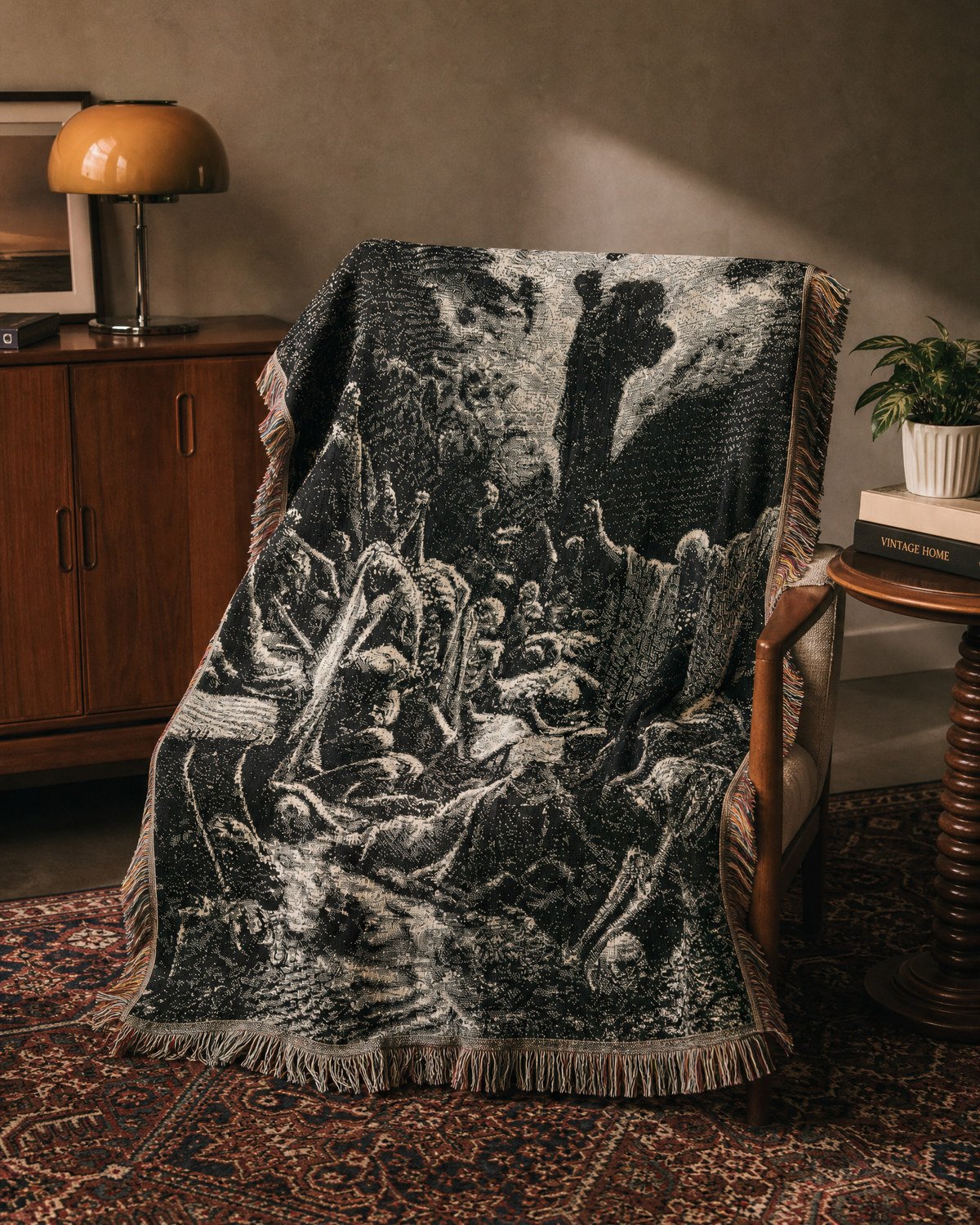
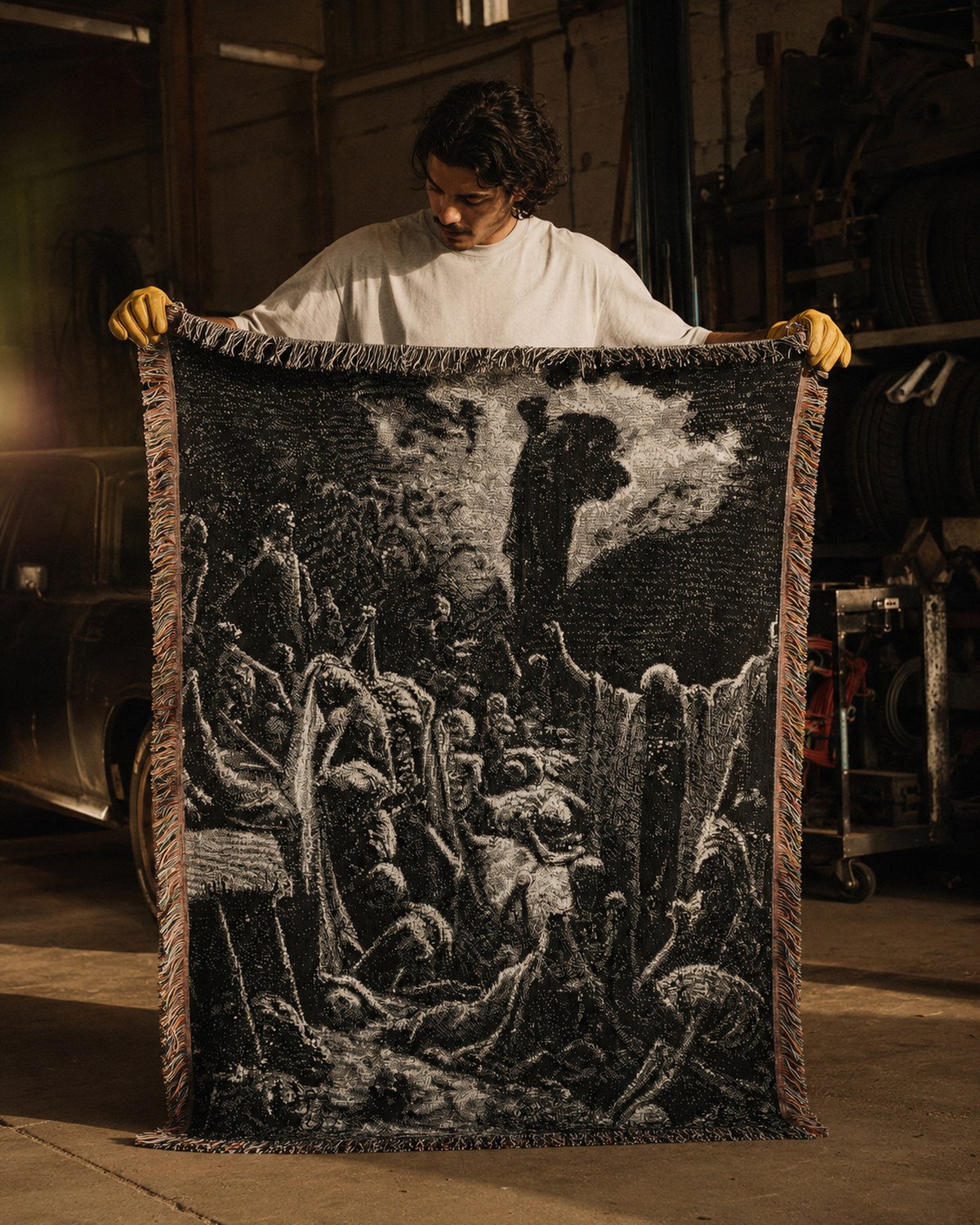
The Vision of the Valley of Dry Bones, dated 1866, is one of the wood engravings made after Gustave Doré’s drawings for the illustrated Bible of 1865–66. Beneath a thin crescent moon, a prophet stands dark against the clouds above a valley in which the dead are returning to life. Doré drew the composition directly on a block of wood, and an engraver then cut it. Together with his illustrations to Dante’s Divine Comedy, published between 1861 and 1868, the Bible plates were printed and reprinted for decades in many languages.
Early career
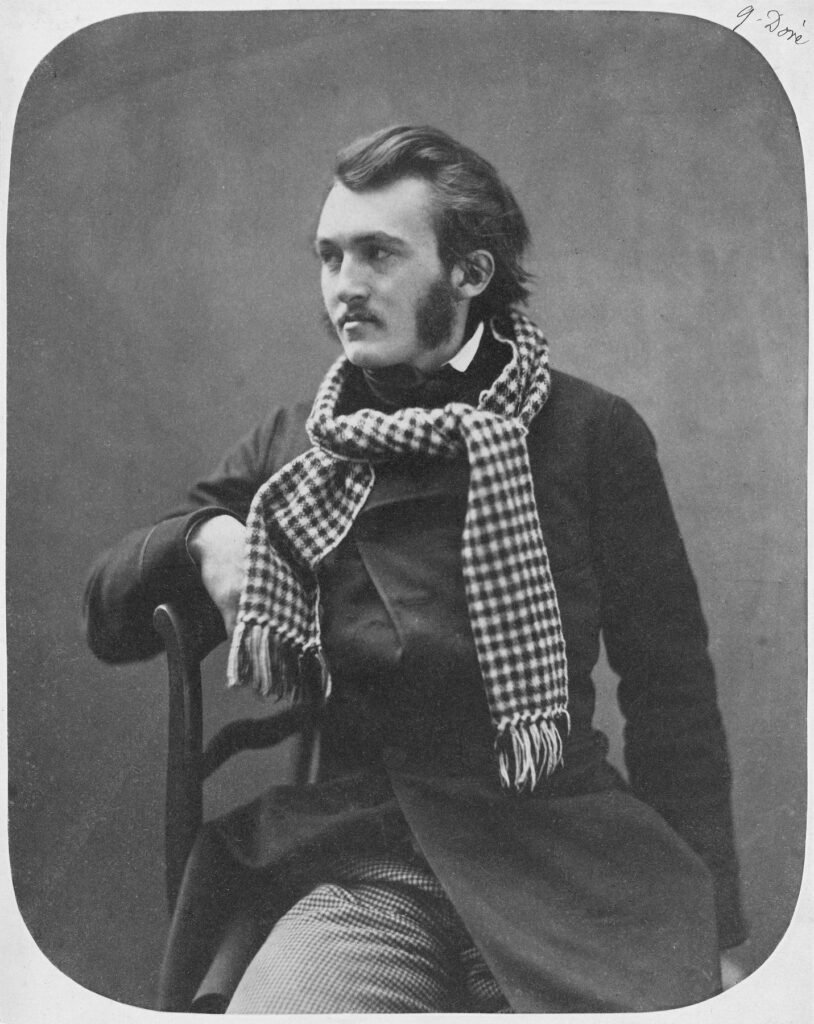
Gustave Doré was born in Strasbourg in 1832. At the age of fifteen he went to Paris, where he was soon drawing caricatures for the comic paper Le Journal pour rire. His ambitions, however, extended well beyond caricature. As early as 1855, around the time Nadar photographed him, he was planning a series of illustrated editions of the great works of literature, and he intended to begin with Dante.
The illustrated Dante
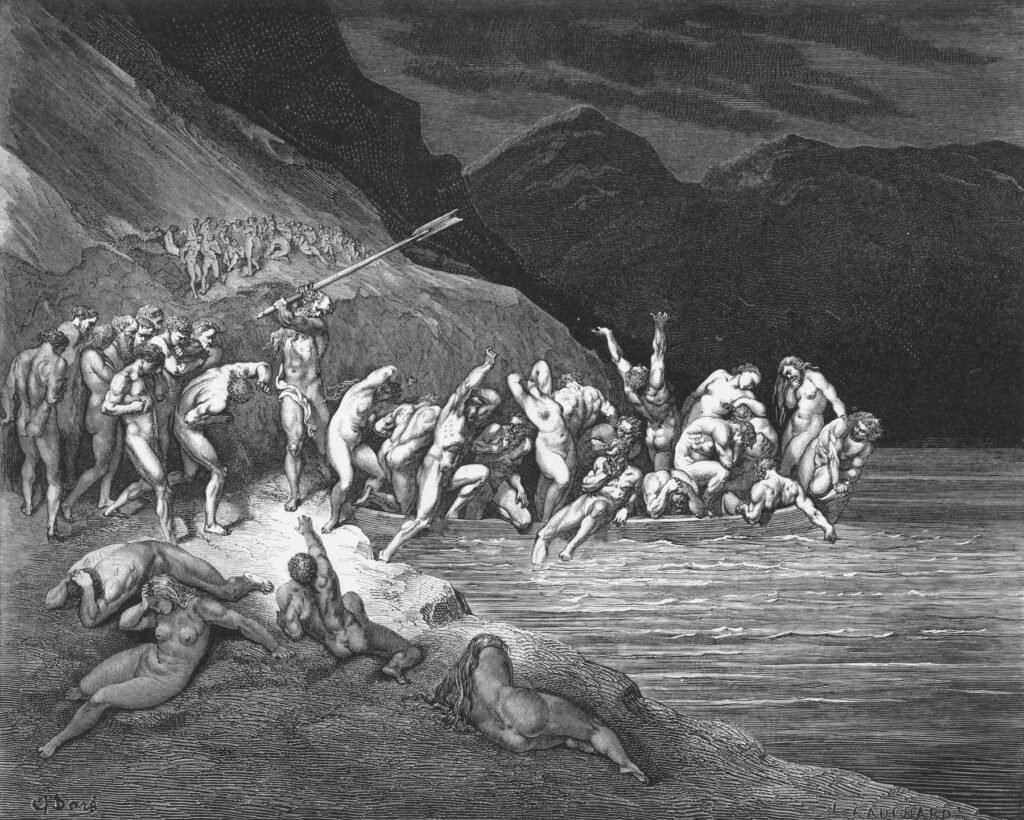
Doré found it difficult to secure a publisher willing to take on the expense of the large folio edition he had in mind, and he financed the first volume of the series himself. The Inferno appeared in 1861 and was an immediate artistic and commercial success. The remaining two parts of the poem followed in 1868, when the publisher Hachette issued Purgatorio and Paradiso together in a single volume. In the years between the two Dante publications, Doré illustrated the Bible.
Drawing on the block
The plates for Dante and the Bible are wood engravings. The block was made of hard boxwood, cut across the grain to give a smooth and even surface. Because such a block could be printed together with the type, wood engraving became the principal means of illustrating books, magazines and newspapers in the nineteenth century. Box trees have narrow trunks, so a large picture was cut on a block made of several pieces glued together. On occasion several engravers worked on one picture at the same time, each on a separate piece, and the pieces were joined once the cutting was complete.
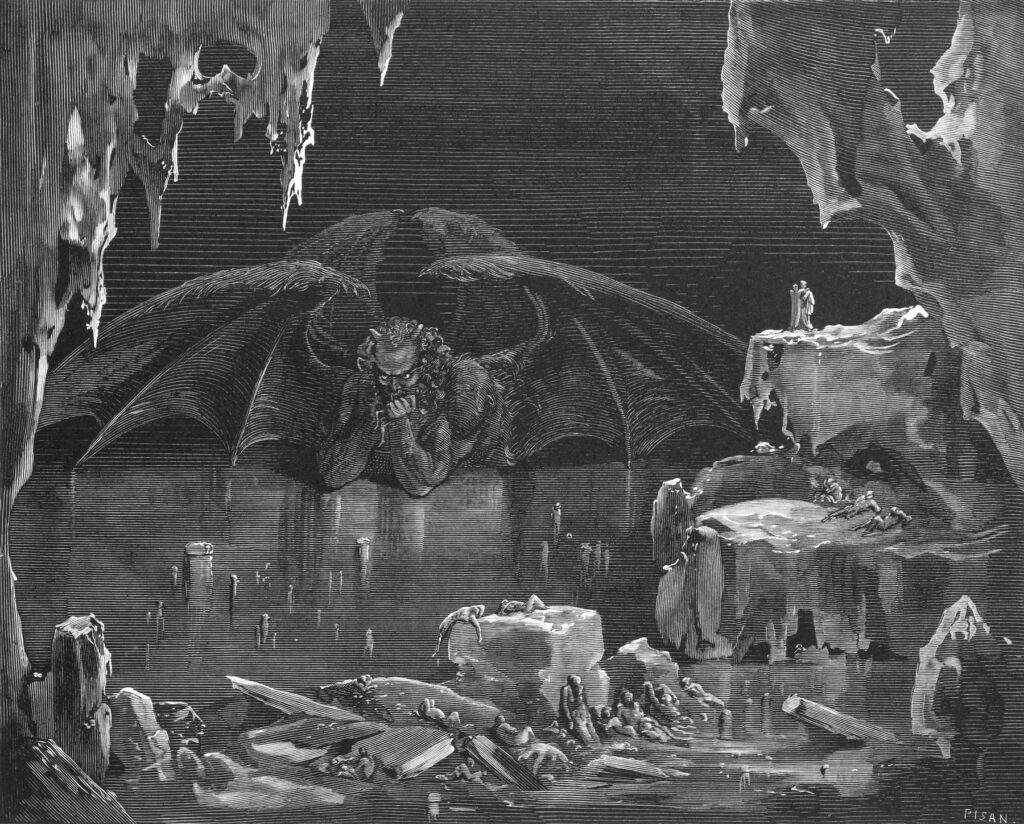
Doré drew directly on the wood, often in grey washes rather than in line, and left the engraver to translate those tones into lines that would print. In the skies of the Dry Bones and Paradiso plates, the greys are built up from fine parallel lines. The cutting destroyed the drawing on the surface of the block, and because the printed image was the work of another hand, such prints are described as engravings “after” Doré. He employed more than forty engravers to cut his designs. One of them, Héliodore Pisan, recalled in a letter of 29 November 1886 that, as far as the engraving was concerned, Doré “left me free, but I didn’t make any changes to his drawings.”
The illustrated Bible of 1865–66
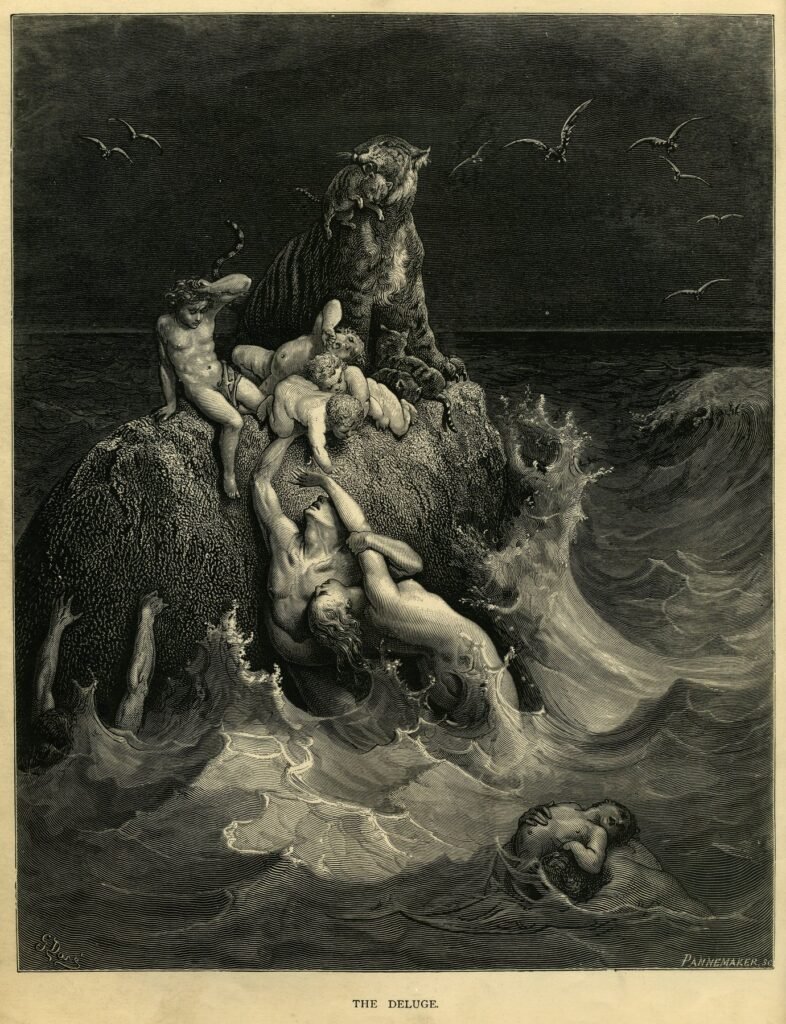
The Bible was published by Alfred Mame in Tours. Its first edition, in two volumes of about a thousand folio pages, was produced for 1 December 1865 to take advantage of Christmas sales. The print run of 3,200 copies sold out very quickly, and a revised edition followed in 1866. From the start the work also appeared in English, published in London by Cassell, Petter, and Galpin.
Ezekiel’s vision of the valley of dry bones
The Vision of the Valley of Dry Bones illustrates chapter 37 of the Book of Ezekiel. The prophet, one of the exiles in Babylonia, is set down in a valley full of bones that are “very dry.” God asks him, “Son of man, can these bones live?” and Ezekiel answers with care: “O Lord God, thou knowest.” When he prophesies over the bones as he is told, there is a noise and a shaking, and they come together, “bone to his bone.” Sinews, flesh and skin follow, and when breath enters them last, the dead stand up on their feet.
The chapter then explains the vision. The bones are “the whole house of Israel,” the prophet’s own people. They have been saying, “Our bones are dried, and our hope is lost,” and the answer given to them is a promise: “I will open your graves.”
Doré’s plate shows several stages of the miracle within a single image. In the foreground bare skeletons sit up, while other figures remain wrapped in shrouds, a detail that does not appear in the chapter. At the upper left a man already stands whole. The composition can therefore be read from the bottom upwards, from loose bones to a figure on his feet, with the prophet above the scene under a thin crescent moon.
Paradiso, Canto XXXI
Dante completed the Divine Comedy shortly before his death in 1321. In its final part, Paradiso, the poet rises through the heavens to the Empyrean, the heaven of pure light, where the blessed are gathered into the shape of a white rose. Canto XXXI opens with this image, given here in the translation by Henry Francis Cary:
In fashion, as a snow-white rose, lay then
Dante, Paradiso, Canto XXXI, lines 1–3, translated by Henry Francis Cary
Before my view the saintly multitude,
Which in his own blood Christ espous’d.
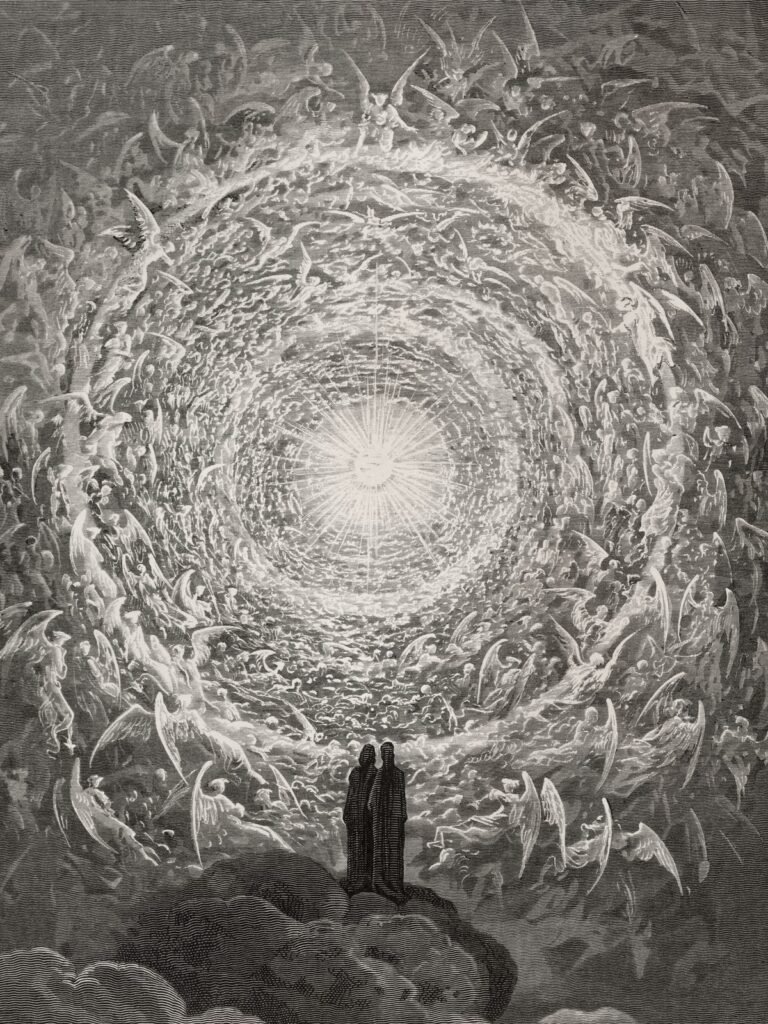
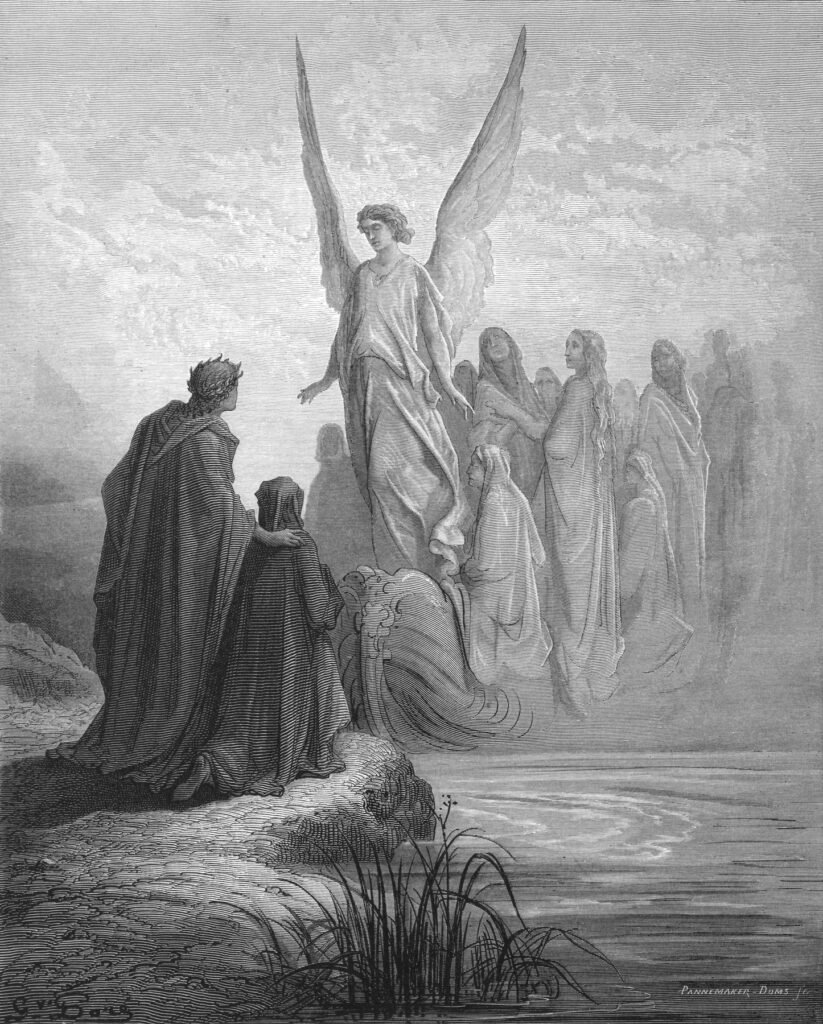
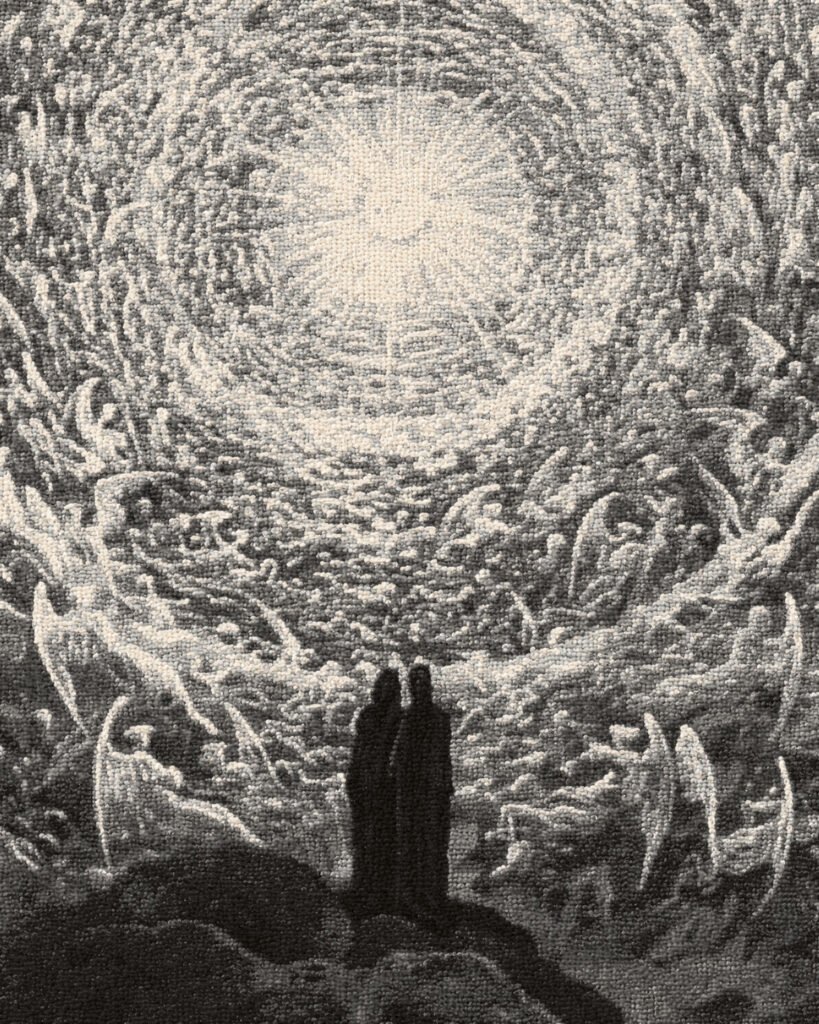
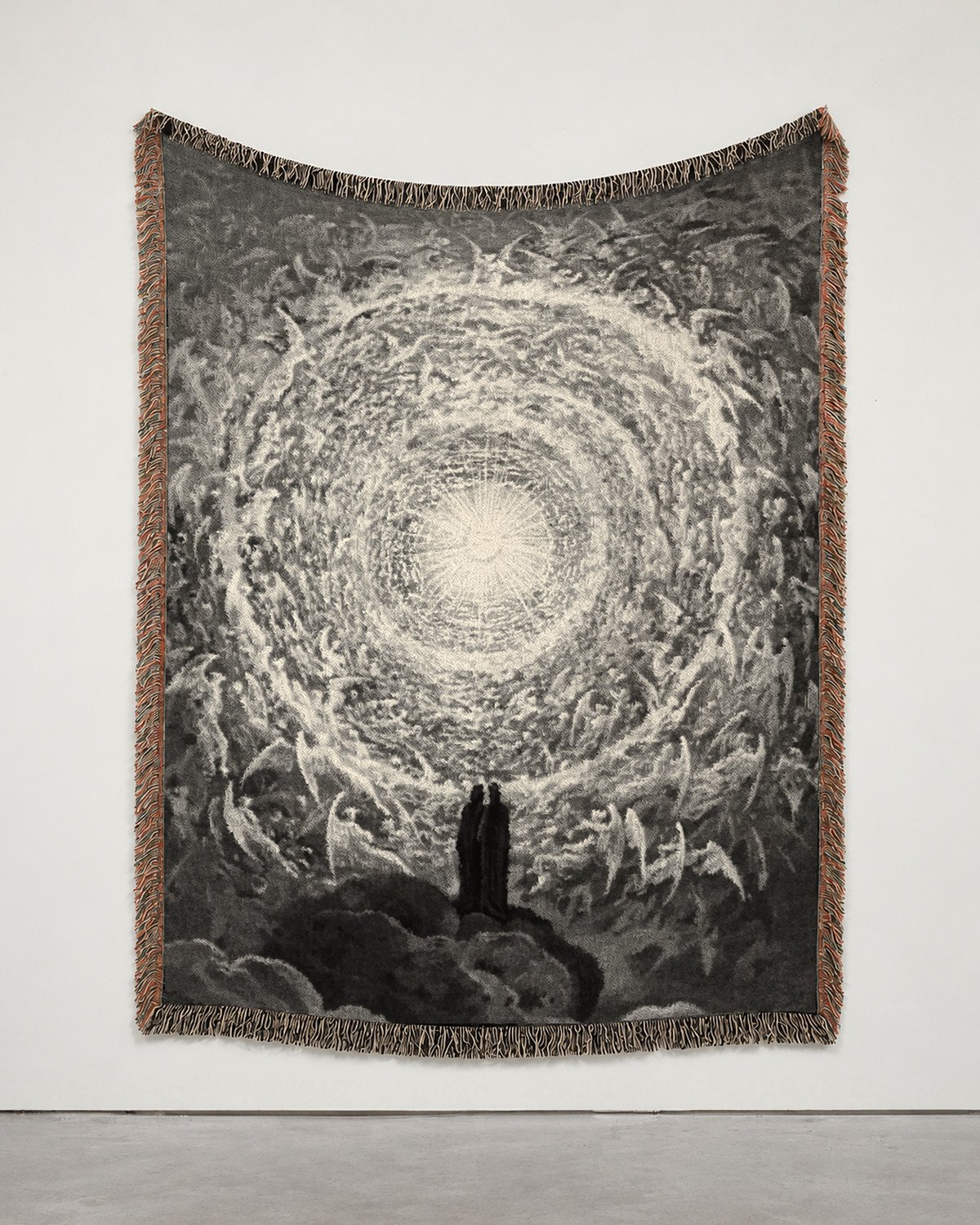
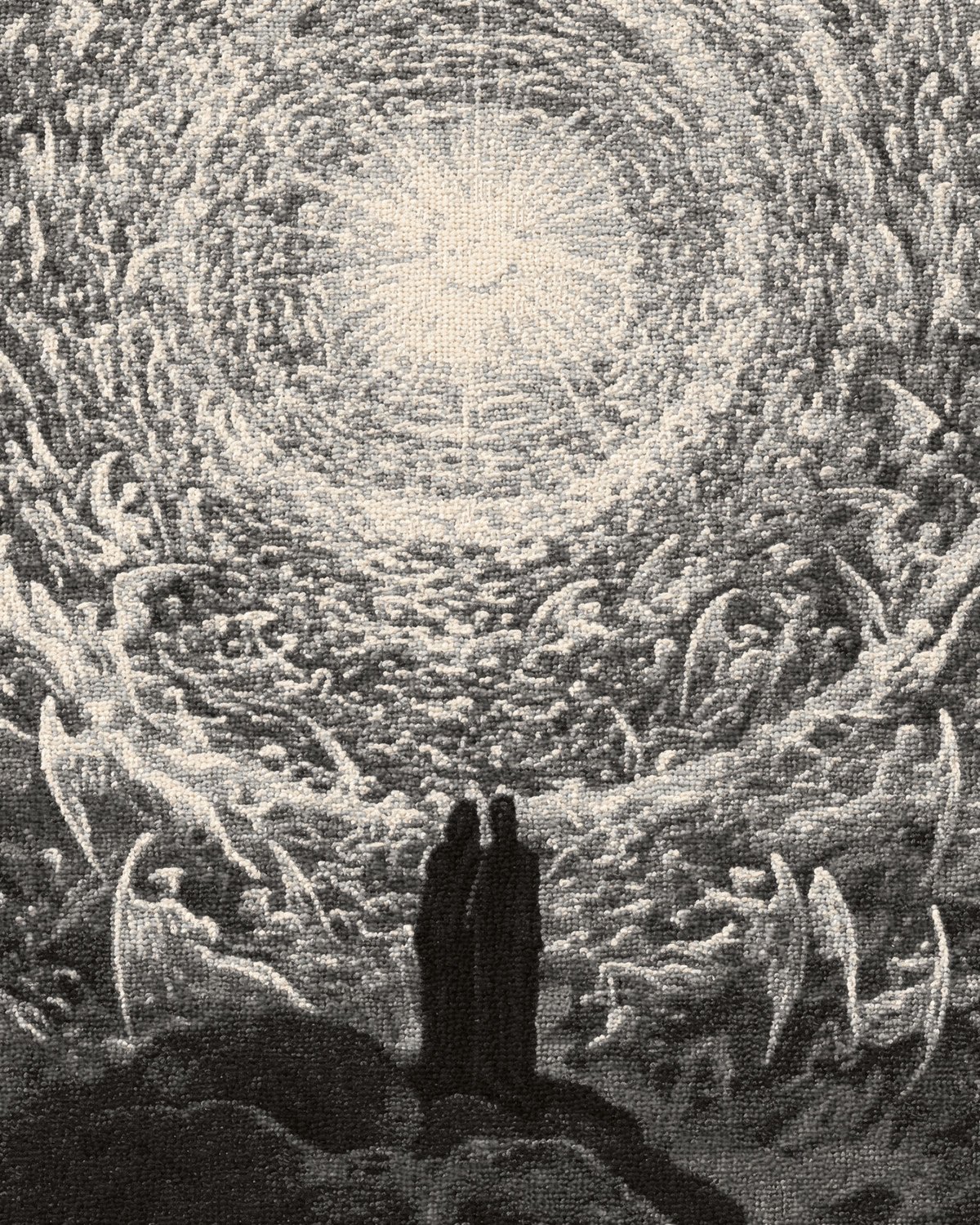
Doré’s plate for the opening of the canto was first published in 1868. He rendered the rose as a vast funnel of light, its rings filled with white winged figures. These are the angels, whom Dante compares to a swarm of bees dropping down into the flower and rising again.
At the foot of the rose two dark figures, seen from behind, stand on a rock, very small against the light above them. They are usually identified as Dante and Beatrice, who has guided him through heaven. Later in the canto, when Dante turns to speak to Beatrice, he finds an old man in her place, Saint Bernard, and learns that she has already taken her seat high in the rose. From that distance she smiles, looks at him once more and, in Cary’s words, “tow’rds th’ eternal fountain turn’d.” In Doré’s plate the two still stand side by side.
Reproduction and later reception
In the second half of the nineteenth century most wood engravings were printed from electrotypes, metal copies of the block, rather than from the wood itself, and the most important of Doré’s plates were copied in this way. His Dante illustrations appeared in roughly 200 editions. Mame reissued the Bible in 1874 and again in 1882, and its engravings appeared in American, German, Russian and Hebrew editions. In France many of them also found their way into popular publications.
Vincent van Gogh’s copy of one of Doré’s London scenes was also made from a reprint. In February 1890 he painted Doré’s prison exercise yard at Newgate, a scene first published in London: A Pilgrimage in 1872. He worked from a print of the engraving that had appeared in the Dutch magazine De Katholieke Illustratie. Writing to his brother Theo from Saint-Rémy on 12 February, he reported: “I’ve tried to copy Daumier’s Drinkers and Doré’s Penitentiary, it’s very difficult.”
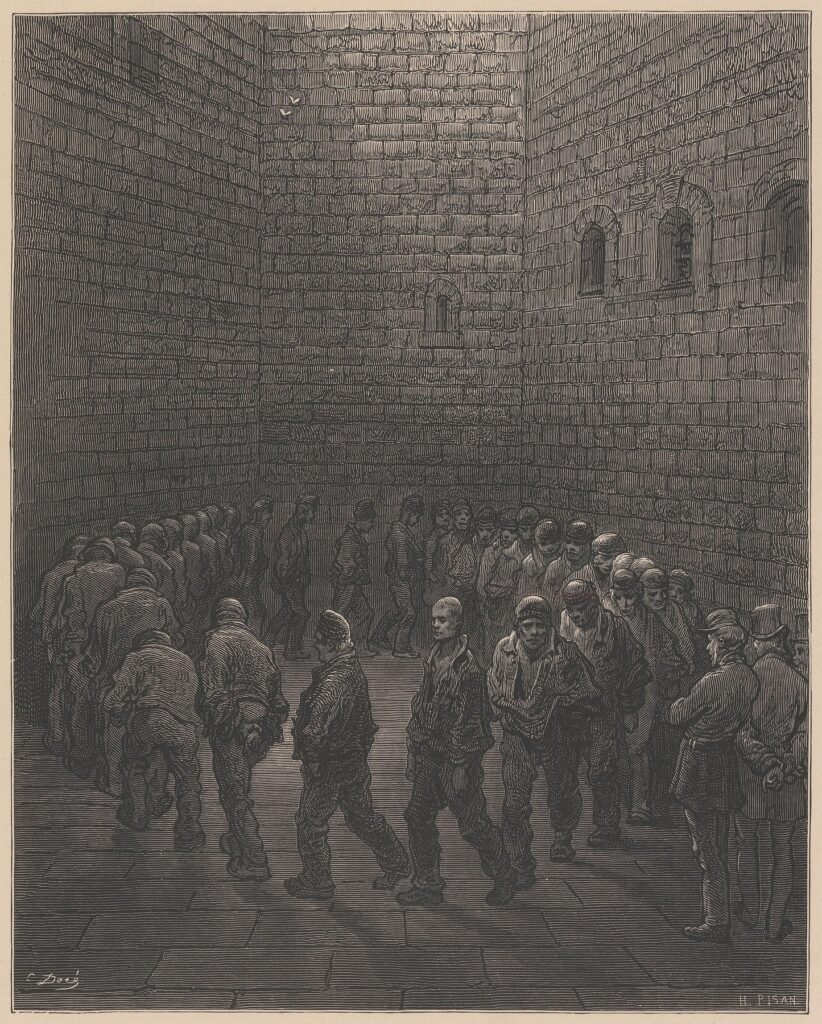
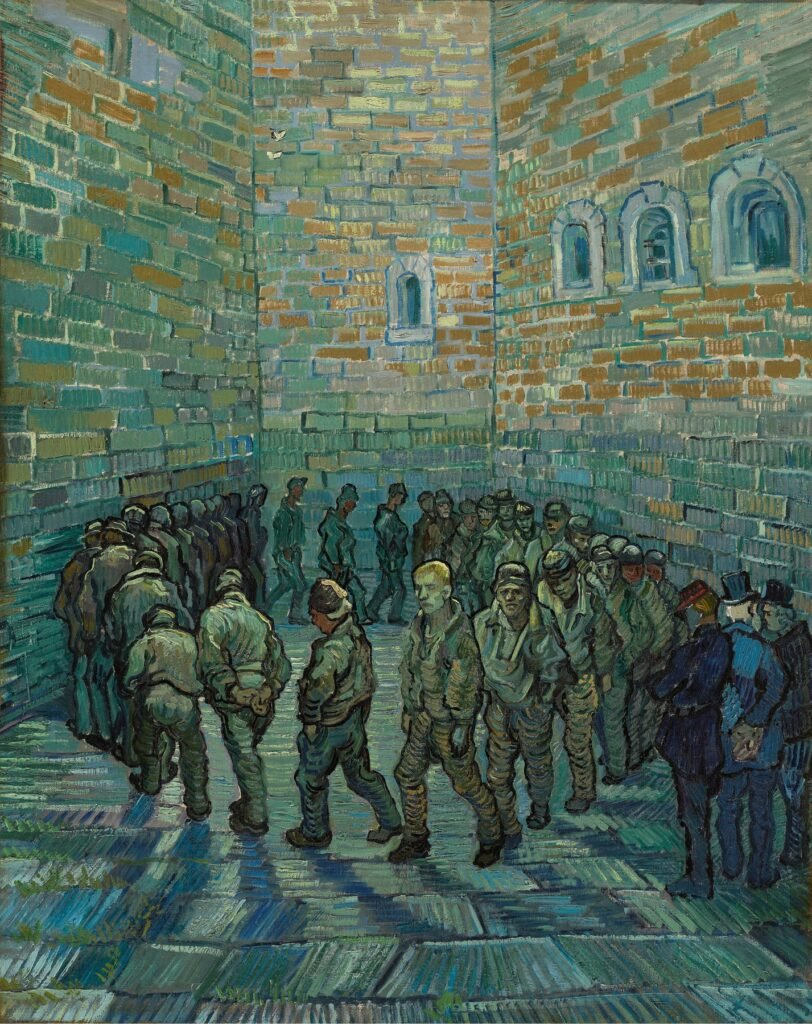
Doré died in Paris in 1883, at the age of fifty-one. The drawings he made on the blocks did not survive the cutting, but the engravings, reissued by publishers in several countries, kept his compositions in circulation for decades. Seven years after Doré’s death, Van Gogh copied one of them in paint from a print in a Dutch magazine, far from the book for which it was first designed.
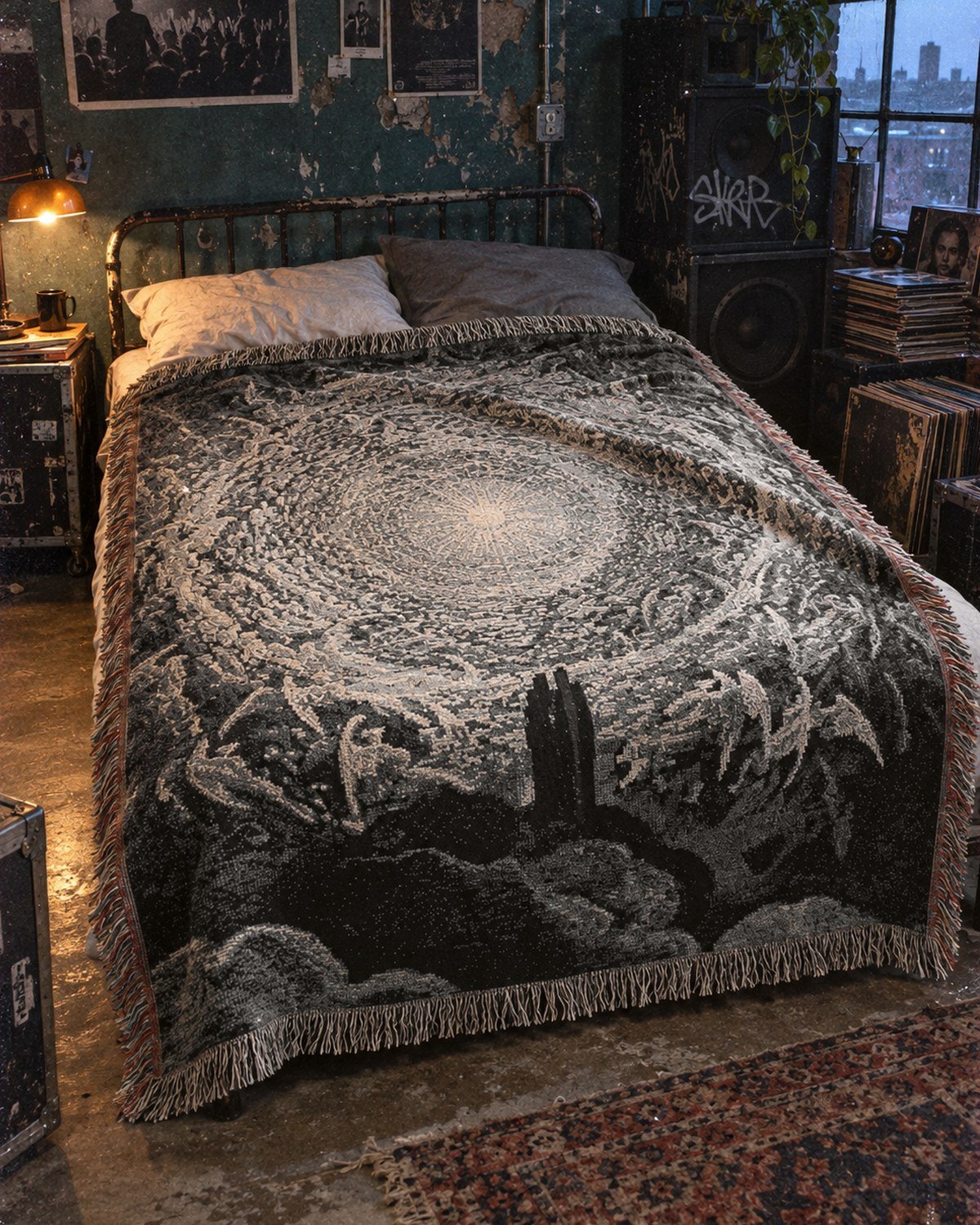
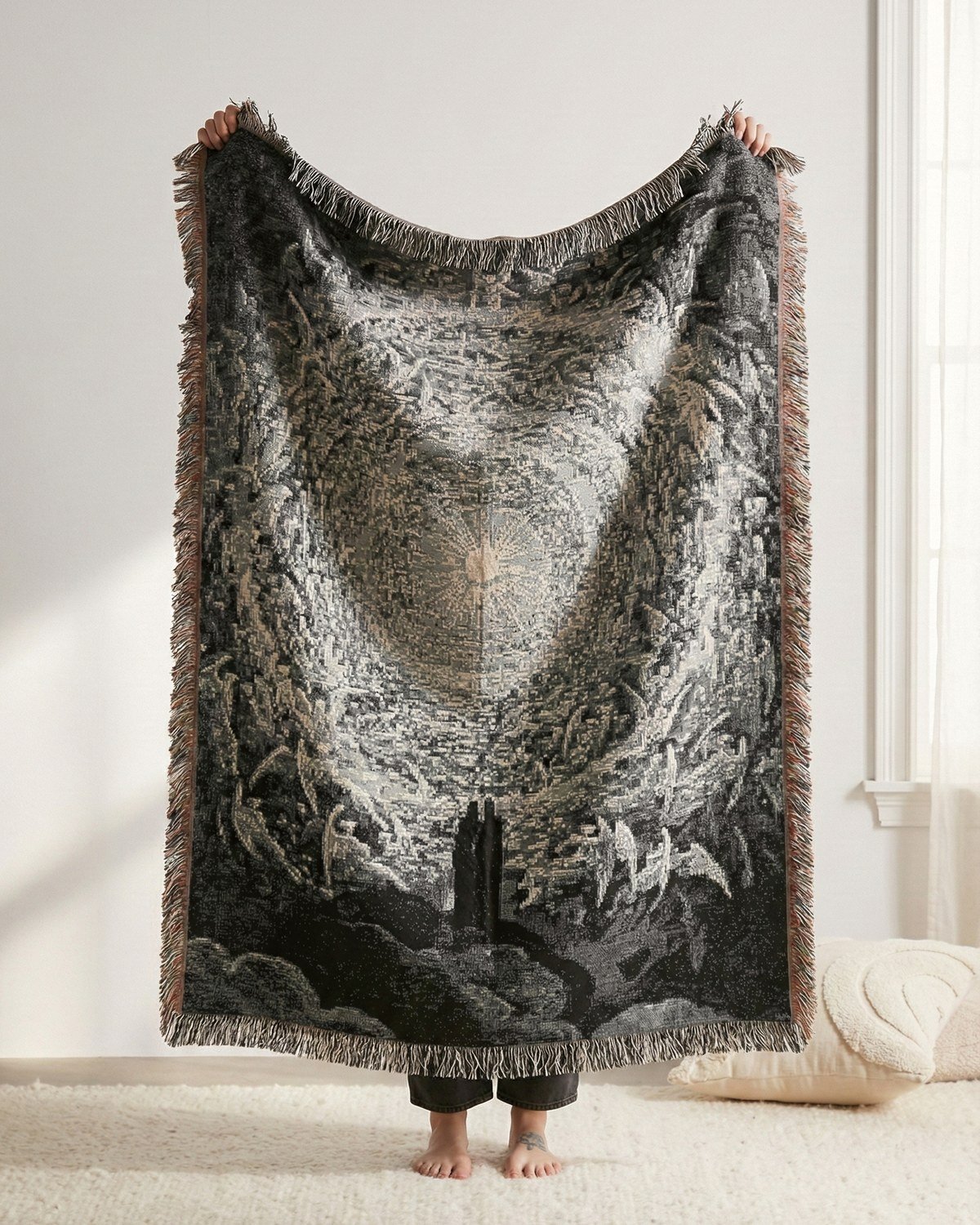
Both plates are reproduced in woven cotton in The Noha Studio collection, as N° 005 The Valley of Dry Bones and N° 007 Paradiso, Canto XXXI.
Sources
- Aida Audeh, “Gustave Doré,” The World of Dante, Institute for Advanced Technology in the Humanities, University of Virginia. worldofdante.iath.virginia.edu
- Serge Ceruti, “Gustave Doré and the Bible,” Ut pictura18, Aix-Marseille Université. utpictura18.univ-amu.fr
- “Gustave Doré,” Encyclopaedia Britannica. britannica.com
- “Gustave Doré,” Wikipedia (birth, death, caricatures at fifteen, electrotyped plates). en.wikipedia.org
- Philip V. Allingham, “Gustave Doré: Illustrator of Paradise Lost,” The Victorian Web. victorianweb.org
- Philip V. Allingham, “The Technologies of Nineteenth-Century Illustration,” The Victorian Web. victorianweb.org
- Simon Cooke, “George Pinwell and wood-engraving: a previously unpublished letter,” The Victorian Web. victorianweb.org
- Cleveland Museum of Art, collection record 1932.308, note on wood engraving. clevelandart.org
- Vincent van Gogh to Theo van Gogh, Saint-Rémy, 12 February 1890, letter 854, with notes; and letter 850, note 14. Vincent van Gogh: The Letters, Van Gogh Museum and Huygens ING. vangoghletters.org
- “Prisoners’ Round (after Gustave Doré),” Wikipedia. en.wikipedia.org
- Ezekiel 37:1–14 and 1:1–3, King James Version, Bible Gateway. biblegateway.com
- “The vision of the valley of dry bones,” from The Holy Bible with Illustrations by Gustave Doré (London: Cassell, Petter, and Galpin, 1866), The Victorian Web. victorianweb.org
- Dante Alighieri, The Vision of Paradise, translated by Henry Francis Cary, with illustrations by Gustave Doré, Project Gutenberg eBook #8799. gutenberg.org
- Dante Alighieri, Paradiso, Cantos XXX and XXXI, Italian text, Wikisource. it.wikisource.org
- “Divine Comedy,” Wikipedia (completed shortly before Dante’s death in 1321). en.wikipedia.org
- Wikimedia Commons, “The Vision of The Valley of The Dry Bones.jpg” and “Paradiso Canto 31 (148200393).jpg” (scan of the 1871 Berlin edition, Polona, National Library of Poland). Dry Bones · Paradiso

.jpg)